

Slowscreen SlowScreen
Toggle sidebar

Just launched: free lifetime premium for the first 1,000 members to activate their account.

Start free

Toddler Learning with Ms Rachel

Good

Recommended age Unlock

Co-watching from age 3

Stimulating

Exact score locked

Watch on Netflix
Save
Toddler Learning with Ms Rachel

Share

Pass this find on to another parent

Link preview

Ms Rachel: Toddler Learning with Ms Rachel | Good, co-watching from age 3

Ms Rachel: Toddler Learning with Ms Rachel | Good, co-watching from age 3 - Slowscreen

Good · Co-watching from age 3. Ms Rachel, a live teacher, guides toddlers through zoo and jungle animals using a repeating peekaboo rhyme, songs, movement and p...

slowscreen.com

https://slowscreen.com/en/series/ms-rachel/s2/e1-toddler-learning-with-ms-rachel

https://slowscreen.com/en/series/ms-rachel/s2/e1-toddler-learning-with-ms-rachel

Slowscreen

Ms Rachel: Toddler Learning with Ms Rachel | Good, co-watching from age 3 - Slowscreen

Good · Co-watching from age 3. Ms Rachel, a live teacher, guides toddlers through zoo and jungle animals using a repeating peekaboo rhyme, songs, movement and p...

Ms Rachel: Toddler Learning with Ms Rachel | Good, co-watching from age 3

slowscreen.com

Ms Rachel: Toddler Learning with Ms Rachel | Good, co-watching from age 3 - Slowscreen

Good · Co-watching from age 3. Ms Rachel, a live teacher, guides toddlers through zoo and jungle animals using a repeating peekaboo rhyme, songs, movement and p...

Ms Rachel: Toddler Learning with Ms Rachel | Good, co-watching from age 3
slowscreen.com

Ms Rachel: Toddler Learning with Ms Rachel | Good, co-watching from age 3 - Slowscreen

slowscreen.com · Posted by you

Ms Rachel: Toddler Learning with Ms Rachel | Good, co-watching from age 3 - Slowscreen

0 Share
Ms Rachel: Toddler Learning with Ms Rachel | Good, co-watching from age 3
To
Subject Ms Rachel: Toddler Learning with Ms Rachel | Good, co-watching from age 3

Good · Co-watching from age 3. Ms Rachel, a live teacher, guides toddlers through zoo and jungle animals using a repeating peekaboo rhyme, songs, movement and p...

https://slowscreen.com/en/series/ms-rachel/s2/e1-toddler-learning-with-ms-rachel

Share on WhatsApp Share on X Share on Facebook Share on Telegram Share on Reddit Share on Email

See the exact scores

The review is yours to read. Create a free account to reveal the exact SlowScreen score and every pillar score.

Create free account
This program is stimulating. It actively demands attention and can feel intense. For the recommended age, this may be on the more intense side. The pacing is moderate. The story remains easy for a child to follow. The sound is intense and continuously present. The visuals are busy, with a lot of movement and frequent changes.
This is a long chain of self-contained animal segments rather than one story, so there is no single thread to follow from start to finish, and the clearest limit is this lack of an overarching plot. Within each segment the build-up is clear and predictable: the same peekaboo rhyme announces every new animal, and small sequences like the baby elephant searching for its mama unfold in a sensible order. One idea arrives at a time with heavy repetition, so a toddler is never asked to hold too much at once. Cause and effect stay easy to see, from 'say open and it will open' to feeding the hungry penguin a fish.
The tone is warm and steady from beginning to end, with Ms Rachel encouraging the child ('good job', 'I'm proud of you', 'you can do hard things') and never mocking or shaming anyone. Little worries stay gentle and are always settled right away: the lost baby elephant finds its mama, the wobbly block tower is rebuilt, and when the mother duck is sad her ducklings all come back. She even names her own feelings out loud, saying 'I feel frustrated, I need to take a deep breath', which models calm recovery for the child. The only small caveat is a handful of soft 'uh-oh' moments, but each is soothed before it can build.
Simple problem-solving shows up in several segments, though the depth of independent figuring-out stays modest. The baby gorilla is stuck up a tree so they climb to reach it, and a block tower that keeps toppling gets tried again after a pause, with Ms Rachel linking actions to outcomes ('why did the lion sleep? because he was tired'). She often invites the child to decide what to do next, but many steps are short and some answers are handed over quickly rather than worked through. Even so, the trial-and-error and 'I can always get back up again' modelling give a toddler a clear picture of trying, failing, and trying once more.
Language is where this video stands out. Ms Rachel uses short, clear sentences with concrete words, speaks slowly and crisply, and models early words and sounds a toddler can copy, from 'uh-oh', 'mama' and 'more' to animal noises like 'quack' and 'roar'. She repeats key words many times in meaningful ways and pauses to let the child answer, which is exactly what supports children just learning to talk. There is plenty of cheerful 'wow' and 'yay', but it sits alongside real information and description, such as naming baby animals and explaining opposites like big and small, keeping the talk purposeful.
Much of what happens can move straight into real play: Ms Rachel asks the child to fetch real blocks, a teddy bear or toy animals, then builds a pretend zoo step by step, makes a cozy nest from pillows and blankets, and tucks a stuffed animal in for the night. Real footage of elephants, lions, giraffes and pandas anchors the animals in the actual world, and everyday outings like buying a ticket, using binoculars and getting ice cream reflect familiar experiences. Some parts lean on imagination, such as dancing bananas and animals with cartoon faces, but the make-believe is usually named as make-believe ('I'm pretending this chicken egg is a penguin egg'), which keeps real and pretend clearly apart. The mix of hands-on activities and recognizable social moments gives this solid everyday value.

More information

This score shows how inclusively the series portrays diverse people, families and cultures. Scale: Limited → Varied → Rich → Inclusive.
A single host leads from start to finish, joined by song ensembles that bring visible variety in skin tone and gender, plus brief real and animated glimpses of diverse children and families. Everyone on screen takes part on an equal footing, sharing the singing, movement and pretend play without stereotyped divisions, and the video openly names feelings and tells children that each of them is unique. The breadth is genuine but rests mostly on the performing adults, with older people and different family setups hardly present. The result is a warm, inclusive picture that still leaves room to widen who appears.
This score shows whether the series stays close to everyday reality or leans into fantasy. Scale: Fantasy → Mixed reality → Realistic.
The world here is grounded in everyday life: a visit to the zoo, real footage of lions, giraffes and pandas, and household objects like blocks, pillows and eggs used in play. Imagination shows up as clearly labeled pretend-play, from acting like an elephant to building a pretend zoo, sitting comfortably alongside the real animal facts being taught. No villain appears anywhere; the small problems, a baby elephant looking for its mama or a block tower that topples, come from situations rather than a bad character. For a child of this age, the steady blend of real and make-believe is an easy fit.
This score shows how enjoyable the series is for parents watching along. Scale: Tedious → Tolerable → Pleasant → Enjoyable.
As a co-viewing adult you can have this on comfortably, but it gives you little of your own to enjoy. Everything is aimed at a toddler, with direct questions and long answer-pauses, and the only real grown-up wink is a 'pouch potato' pun about a lazy kangaroo. There is no plot to track, just a themed loop of songs, animal reveals and pretend-play, and over the long run the constant refrains start to wear. What holds up is the craft: a calm voice, clear sound and clean compositing that never grate.

Themes

Pretend play

Recurring

Ms Rachel builds a pretend zoo from blocks and takes a make-believe trip, saying 'let's build a pretend zoo together'.

Counting

Recurring

Repeated counting of animals and a full 'let's count to 20 together' number sequence.

Colors

Recurring

Colour reveals for surprise animals ('what color is this house? blue') and an 'I Love a Rainbow' segment.

Nature

Recurring

Real footage of elephants, lions, giraffes and pandas is shown during the 'Magic Movie' clips.

Imagination

Recurring

Children are invited to pretend to be gorillas, snakes and penguins and to imagine their own zoo.

Family

Recurring

Baby animals are reunited with parents, like the calf finding its mama and the gorilla infant finding its dad.

Emotional regulation

Incidental

Ms Rachel says 'I feel frustrated, I need to take a deep breath' when a block tower falls.

Behaviour

Repetitive content

The 'a tweet, a roar... who's in the zoo playing peekaboo' rhyme repeats before nearly every animal, and song verses repeat many times.
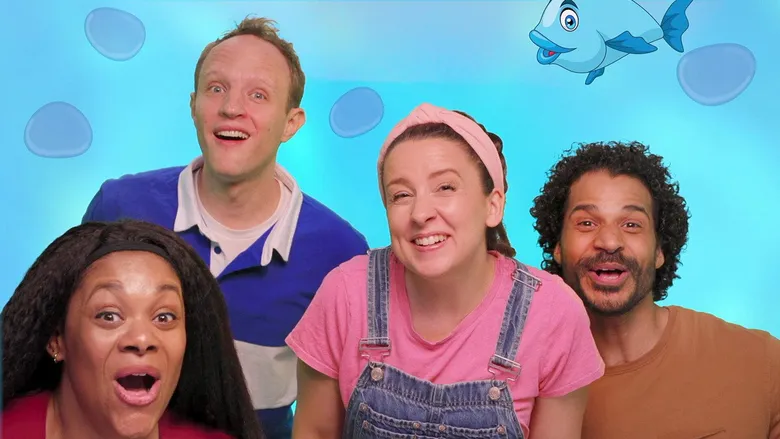
Ms Rachel, a live teacher, guides toddlers through zoo and jungle animals using a repeating peekaboo rhyme, songs, movement and pretend play, with guest appearances by The Wiggles. Children meet elephants, gorillas, lions, penguins and more through real animal footage, toys and puppets, and practise colours, counting to twenty, opposites and letters along the way. She builds a pretend zoo from blocks, takes a make-believe trip to see the animals, and sings familiar nursery rhymes. The video closes with the ABC song and a warm goodbye to the viewer.

Ms Rachel
S01 E01

Ms Rachel

Learn to Talk

Stimulating
recommended age Unlock co-watching from 3
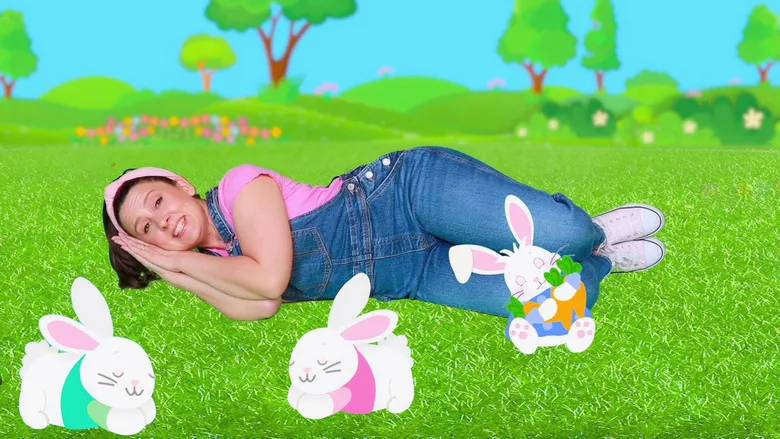
A host named Ms Rachel guides toddlers through learning to talk, opening a 'What's Inside?' surprise box to reveal objects like a fish, turtle, car, and butterfly. She names each item and its color, counts, sings songs such as the ABC song and 'Skinnamarink', and steps into pretend worlds to swim and fly. A guest family teaches colors in sign language, and other adults join for songs and movement. It closes with the host praising the child and waving goodbye until next time.

Ms Rachel
S01 E02

Ms Rachel

Baby Learning

Stimulating
recommended age Unlock co-watching from 3

A live-action host guides babies and young toddlers through a long series of songs, word games and gesture activities filmed against colourful studio and animated backgrounds. She teaches first words like mama, dada, ball and car, plays peek-a-boo, blows bubbles, stacks blocks and sings familiar rhymes such as 'Wheels on the Bus' and 'Twinkle Twinkle'. Real children, a teddy bear, a bear puppet and a blue puppet friend appear in short clips between segments. The video closes with the host waving 'bye-bye friends' and a 'Ms Rachel' title card.

Ms Rachel
S01 E03

Ms Rachel

Learn to Read

Stimulating
recommended age Unlock co-watching from 3
Ms Rachel hosts a long letter-learning session that teaches the sounds of A and T and blends them into the word 'at'. Between direct-to-camera lessons she opens surprise eggs, plays a lava-jumping letter game, reads the storybook 'Cat and His Mat', visits a library and sings songs with a rotating cast of adults and children. Guest hosts like Miss Keisha and Michael the librarian appear in short segments. It closes with a message that big feelings are okay and a goodbye song.

Ms Rachel
S01 E102

Ms Rachel

Phonics Song

Stimulating
recommended age Unlock co-watching from 3

A real teacher, Ms Rachel, leads a phonics lesson focused on the letters A and T and blends them into the word 'at'. Across many short segments she sings the alphabet, plays letter games like 'the floor is lava', reads the book 'Cat and His Mat', and welcomes guests including a librarian and an astronaut helper. The child is invited to answer questions, say letter sounds, and trace letters along with her. It closes with a message that it is okay to feel sad and a quiet goodbye.

Ms Rachel
S02 E01

Ms Rachel

Toddler Learning with Ms Rachel

Stimulating
recommended age Unlock co-watching from 3
Ms Rachel, a live teacher, guides toddlers through zoo and jungle animals using a repeating peekaboo rhyme, songs, movement and pretend play, with guest appearances by The Wiggles. Children meet elephants, gorillas, lions, penguins and more through real animal footage, toys and puppets, and practise colours, counting to twenty, opposites and letters along the way. She builds a pretend zoo from blocks, takes a make-believe trip to see the animals, and sings familiar nursery rhymes. The video closes with the ABC song and a warm goodbye to the viewer.

Explore more

Just launched: free lifetime premium for the first 1,000 members to activate their account.

Create your account

Search by title, show, tag, or topic

We use functional cookies and Google Analytics to improve our site. Learn more