











This program is well-balanced. It remains mostly easy to follow and process. It is a good fit for the recommended age.
The pacing is moderate. The story remains easy for a child to follow.
The sound is soft and supportive.
The visuals are calm and well-organized.
Everything points at one clear idea: how to swim. The song builds the skill in order, float first, then kicking, then paddling the arms, then blowing bubbles, then putting it all together, so each new piece follows logically from the last. Information arrives in small, spaced portions a child can hold onto, and the lyrics keep linking each action to its result, like practising until you can finally say you can swim. The one caveat is that this is an instructional song rather than a story, so there is little plot beyond the steps themselves.
The mood is warm and upbeat throughout, with smiling faces and friendly encouragement as the children swim side by side. Nothing turns scary or sad, there is no conflict, teasing, or harsh behaviour, and the tone stays consistent from beginning to end. This makes the segment emotionally safe and predictable for a young child. The only nuance is that the cheer stays high the whole way, with few genuinely quiet emotional beats.
The segment lays out the steps to swim clearly, but it hands them over ready-made rather than showing anyone puzzle through them. There is no trial and error, no moment where a character tries, struggles, and adjusts, which is the kind of thinking a six-year-old can follow and learn from. What does work is the goal-driven framing, the wish to be able to swim, and the sensible order of float, kick, paddle, and bubbles that leads to a clear result. As a how-to it is sound; as a window into someone working a problem out, it offers little.
The language is clear and concrete, naming real actions like float, kick, paddle, and blow bubbles, and tying them to familiar images such as a boat, a canoe, and a fish. It also slips in a Spanish phrase, 'puedo nadar' (I can swim), repeated often enough for a child to catch it. Most lines are full, well-formed sentences that give a real instruction. The small caveat is that the chorus leans on repeated sing-along syllables that carry rhythm more than meaning.
This connects directly to real life: learning to swim is a genuine, useful skill, and every step shown can be tried in an actual pool. The actions use recognizable bodies and objects, with no fantasy standing between the song and what a child could practise for real. The setting, children swimming together on a sunny day, mirrors everyday summer life and reads as familiar. A small talking mouse rides along for fun, but it never gets in the way of the practical, transferable message.
More information
This score shows how inclusively the series portrays diverse people, families and cultures. Scale: Limited → Varied → Rich → Inclusive.
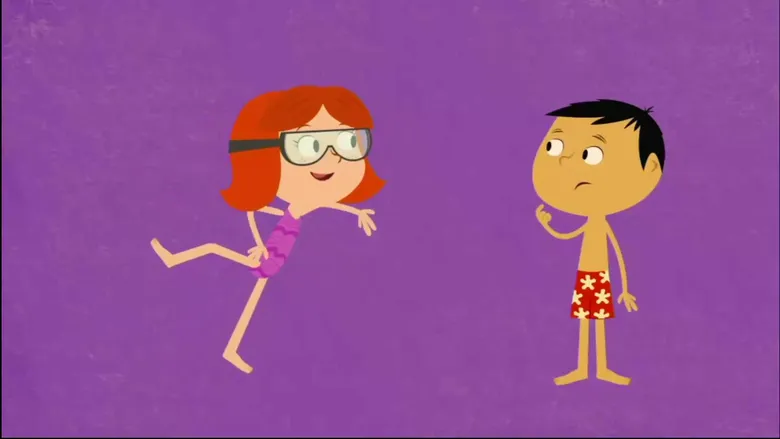
This swimming song gathers a small group of children who differ in skin tone and hair, from a boy with black hair and tan skin to a red-haired girl with freckles and others paddling alongside. It mixes Spanish and English, with the words 'puedo nadar' (I can swim) shown and sung, so a second language feels like a natural part of the fun. Boys and girls join in equally, all learning the same strokes with no stereotyped split of who does what. The short, single-focus song format keeps the picture narrow, with little room for adults, older people, or varied family and home settings.
This score shows whether the series stays close to everyday reality or leans into fantasy. Scale: Fantasy → Mixed reality → Realistic.
This segment stays firmly in the real world, walking step by step through learning to swim: floating like a boat, kicking, moving your arms and blowing bubbles underwater. There is no villain and no good-versus-evil story; the only challenge is mastering a new skill, rounded off with a light joke when the child admits 'I can't swim!' yet. With no fantasy in play, there are no invented rules to track, and the grounded, everyday subject sits naturally for this age.
This score shows how enjoyable the series is for parents watching along. Scale: Tedious → Tolerable → Pleasant → Enjoyable.
This is a short bilingual song about learning to swim, easy to have on but built almost entirely for the child. A parent gets a clean look, a tuneful melody and a little Spanish, yet there are no jokes or real story to follow, and the chorus repeats often enough to lodge in your head. The loud palette and looping refrain are the main things that wear on an adult over the full song. It works as calm background company without offering much to actively reward the grown-up watching along.
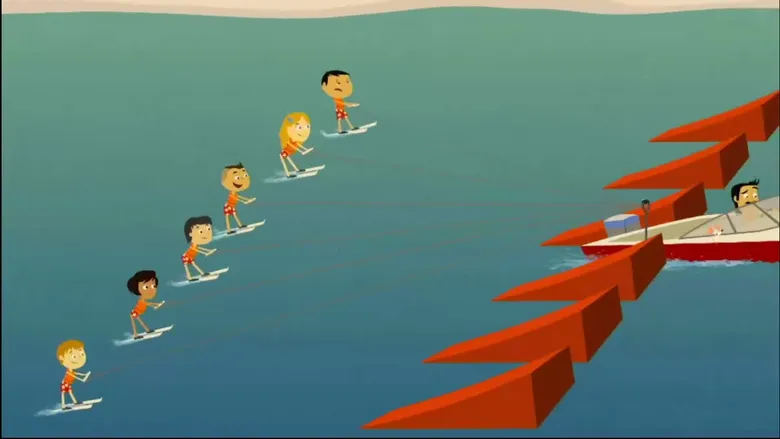
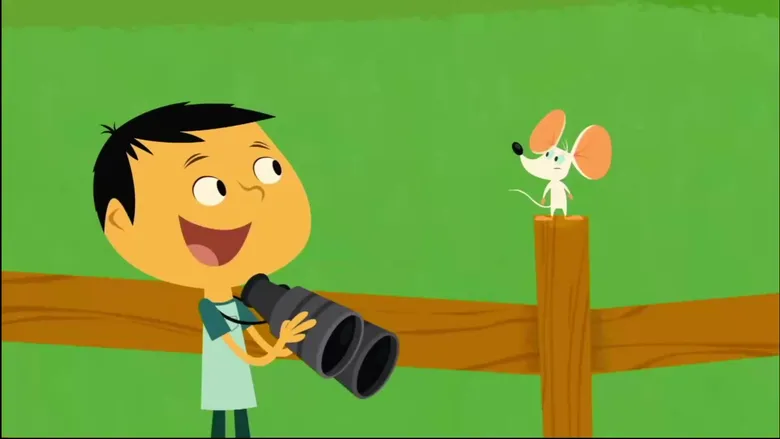
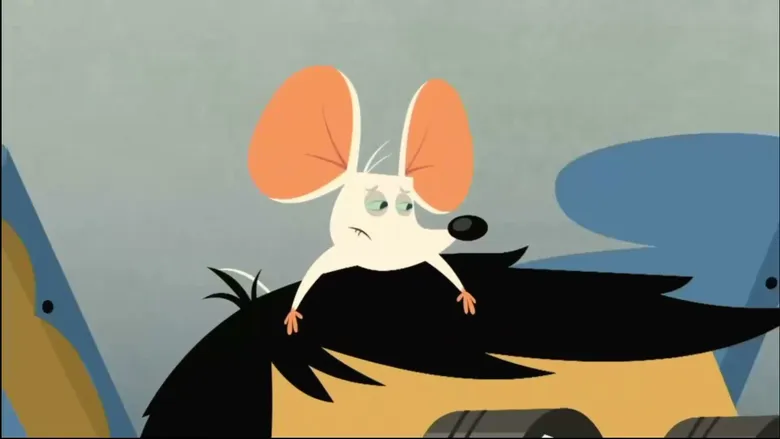
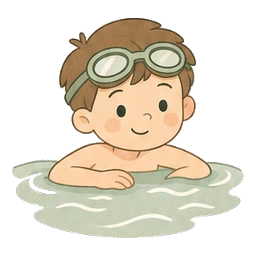
Noah, a young boy with a tiny mouse perched on his head, and a red-haired girl in swim goggles spend this segment in the water learning to swim. A bouncy song walks through the steps one by one: float like a boat, point your feet and kick, paddle your arms, and blow bubbles like a fish. The Spanish phrase 'puedo nadar' (I can swim) appears on screen and in the refrain throughout. By the end the children put all the steps together and celebrate being able to swim.