



















This program is stimulating. It actively demands attention and can feel intense. For the recommended age, this may be on the more intense side.
The pacing is fast. Images follow each other quickly, leaving little time to pause and take in what is happening.
The sound is soft and supportive.
The visuals are well-balanced, with a clear overall view.
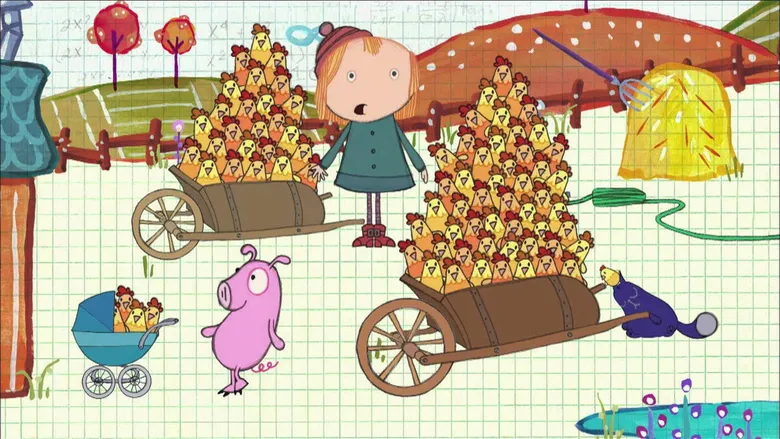
The episode follows a single clear problem from start to finish: Peg and Cat meet space creatures and work toward sorting things out, so children always know what the story is about. Events build in order with a recognizable beginning, middle and end, and each action leads to a sensible next step. The one caveat is that the counting and number ideas stack up densely for the youngest threes, who may follow the story without grasping every math beat. Cause and effect stay easy to follow throughout.
Peg has a habit of getting overwhelmed when a problem feels too big, raising her voice and looking distressed before she settles herself. These worried moments are brief and always followed by her calming down and counting her way through, so children see big feelings named and then soothed within the same scene. Peg and Cat treat each other with warmth and stay consistent in how they respond to one another. The repeated jump into panic is the main thing to watch for sensitive three-year-olds, even though the recovery is reliable.
This episode puts problem-solving front and centre. Peg names the trouble out loud, tries an approach, checks whether it worked and adjusts, usually by counting and grouping the creatures until the problem is solved. Children watch a real thinking process unfold step by step rather than a quick fix. Peg and Cat drive most of the solving themselves, with the small note that the problems tend to land on them from outside rather than growing from their own goals.
Peg speaks in short, clear sentences with concrete words, and the math vocabulary stays simple: counting, numbers, more and less. Words are used consistently and the speech is easy to follow, which helps a young child track what is happening. Most lines carry real information or describe the next step, with a sprinkle of excited exclamations such as Peg announcing she has 'a problem'. A small caveat is that a few number ideas, like reaching one hundred, reach toward the upper edge of what a three-year-old will follow.
Counting, sorting and basic problem-solving are skills a child can carry straight into everyday play, and Peg models them clearly. The friendship between Peg and Cat and the urge to help the creatures mirror real social situations children recognize. The limitation is the setting: this adventure takes place in a fantastical space world full of aliens and a talking cat, which sits some distance from the everyday life a three-year-old connects with most easily. The hands-on math is the part that transfers best off screen.
More information
This score shows how inclusively the series portrays diverse people, families and cultures. Scale: Limited → Varied → Rich → Inclusive.
This space adventure centres on two children, Peg and Ramone, alongside a blue cat, friendly space creatures and a large flock of chickens. Human diversity stays narrow, with no adults, families or everyday settings on screen, though a girl in the lead and a brown-skinned boy bring some variation. Within that small cast the roles are even-handed: the children share the initiative, cooperate as equals and move freely through a range of feelings. The result is a balanced picture when it comes to who does what, but a thin one when it comes to the breadth of people shown.
This score shows whether the series stays close to everyday reality or leans into fantasy. Scale: Fantasy → Mixed reality → Realistic.
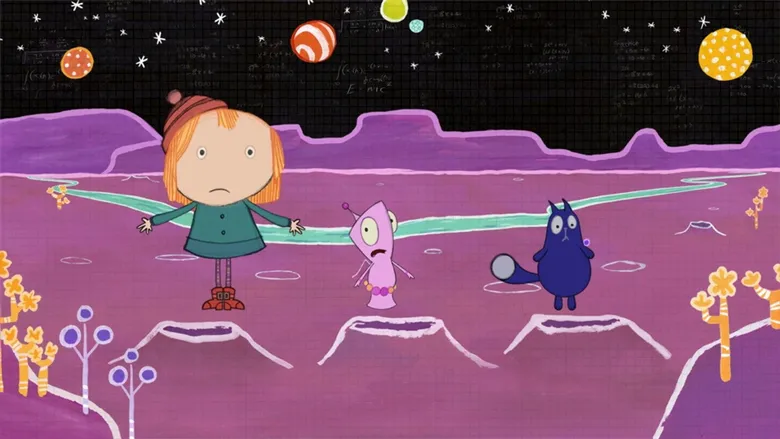
This episode unfolds entirely in outer space, where Peg and her cat fly past purple planets, meet friendly alien creatures, and work out a counting problem together. There is no villain; the trouble grows from a puzzle to figure out rather than from a bad character, and the imagined world holds together with its own steady logic from start to finish. The main thing to flag is that a full space-and-aliens setting leans more make-believe than the mostly realistic stories that suit the youngest viewers best, even though the calm tone and recognizable feelings keep it easy to follow.
This score shows how enjoyable the series is for parents watching along. Scale: Tedious → Tolerable → Pleasant → Enjoyable.
This space adventure offers a parent in the room more than most preschool fare, helped by a real jazz score and Cat's dry humor. The story follows a clear goal, gathering the wandering creatures and counting up to one hundred, with enough momentum to hold adult attention. It is also easy company, calm and quietly paced, with only Peg's loud panic moments standing out. The signature grid-paper look and strong sound make it feel crafted rather than churned out.
Peg, a young girl, and her blue cat travel through a colorful outer-space world filled with planets and small alien creatures. When the creatures create a counting problem, Peg works through it step by step, using numbers and grouping to find a solution, pausing to calm herself whenever it feels overwhelming. Cat stays close and helps along the way, and the two reach the answer together. The episode closes with the problem resolved, followed by end credits.