
















This program is stimulating. It actively demands attention and can feel intense. For the recommended age, this may be on the more intense side.
The pacing is fast. Images follow each other quickly, leaving little time to pause and take in what is happening.
The sound is soft and supportive.
The visuals are calm and well-organized.
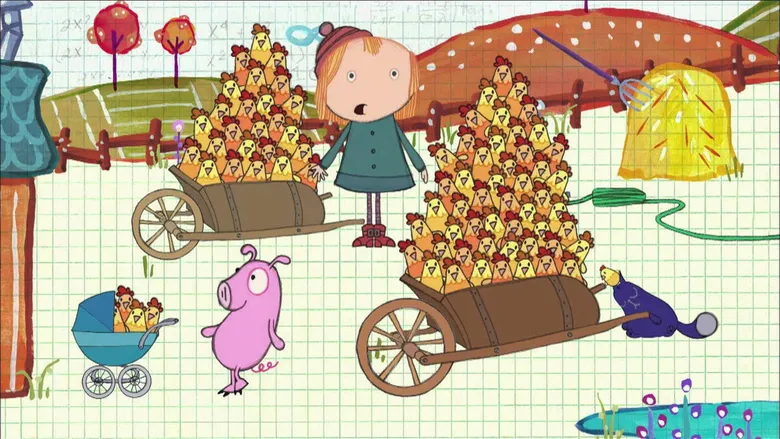
The episode follows one clear thread from start to finish: a sleepover where the pirate guests cannot fall asleep, and everything that happens serves that single goal. Events build in a recognisable order, with each small hitch, a broken remote, not enough bedding, a stuck van of chickens, leading logically to the next, and actions reliably produce the consequence you expect. The one real caveat is how much new information is packed in: counting past ten, the teen numbers and '4 + 1 = 5' arrive in a steady stream and add up to a lot for a three-year-old to absorb. The cause-and-effect logic itself stays clear throughout.
Emotions run warm overall, with Peg and Cat reassuring the homesick, frightened pirates and praising each other often. Peg does swing into worry more than once, announcing she is 'totally freaking out' when a plan stalls, and Cat keeps fretting that nobody notices him. These spikes stay mild and always settle, frequently within the same moment, and Peg even models calming herself by counting backwards from five. The swings between excitement and worry can feel abrupt for a three-year-old, but reassurance and resolution follow each time.
Peg and Cat do the thinking themselves, naming each problem out loud and working toward a solution step by step. When four sleeping bags will not cover five pirates they reason that adding one more makes five, and when the chicken van is stuck they work out that the window has to open wider. The steps are visible and the reasoning holds together, with the characters driving most of the solutions rather than waiting to be rescued. A few fixes lean on counting as a near-magical cure for sleeplessness, which softens the realism of the problem-solving.
The language is mostly concrete, and the math vocabulary, numbers, 'the next number', 'add one more', is used correctly and consistently. The challenge for a three-year-old is how much talk there is and how complex it gets: lines pile up, with jokes and sarcasm such as Cat's 'sounds like a waste of my time' that can outrun a younger listener. Sentences are generally complete and much of the speech is informative rather than just exclamations, though playful filler is sprinkled in. It reads as clear and purposeful, but pitched a little old for the youngest in the range.
The counting and simple addition at the heart of the episode are genuinely useful skills a child can carry into everyday life, and the sleepover itself, hosting guests, missing home, needing comfort to fall asleep, mirrors situations young children recognise. Much of the action sits inside a fantasy frame, though: pirate guests, a talking cat and animals that arrive on cue mean a lot of what happens cannot be copied off-screen. The social dynamics around helping nervous friends settle down are relatable and warm. For this age the real-world payoff is real but partly wrapped in make-believe.
More information
This score shows how inclusively the series portrays diverse people, families and cultures. Scale: Limited → Varied → Rich → Inclusive.
This episode centers on a small cast of mostly fantasy characters, with the girl Peg as the only recurring human and a brief music video adding a dark-skinned dancer on a tropical island. Broader human variety, including different families, ages, homes, and cultural backgrounds, stays largely out of view. Where the episode does well is emotional range: the pirates openly show fear, homesickness, and tenderness, while Peg moves between confidence and panic, so feelings are not locked to one character type. Initiative and knowledge, however, stay concentrated with Peg and Cat, while the guests mainly follow along.
This score shows whether the series stays close to everyday reality or leans into fantasy. Scale: Fantasy → Mixed reality → Realistic.
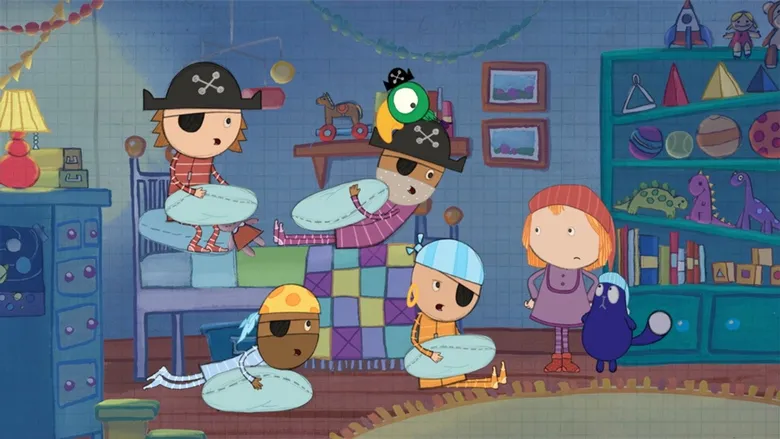
Peg and Cat host a sleepover that blends a very familiar bedtime routine with playful make-believe. There is no villain anywhere, and the small troubles, a TV that won't turn on, too few sleeping bags, homesick pirates who cannot fall asleep, are all worked out with counting and simple addition. The imaginative cast of pirate houseguests, a talking cat and chickens called in to be counted stays consistent within the show's own gentle logic. For the youngest viewers the relatable sleepover heart connects well, even though the pretend cast leans a little more fantastical than the mostly realistic mix these children handle best.
This score shows how enjoyable the series is for parents watching along. Scale: Tedious → Tolerable → Pleasant → Enjoyable.
This sleepover story gives an adult in the room plenty to enjoy, from Cat's dry delivery to the parrot's running worry that nobody counts him. The plot holds together as a real story: the pirate guests grow homesick and scared, and Peg and Cat coax them to sleep by counting animals, though it leans on the series' familiar problem-then-solution shape. A soft jazz soundtrack and a muted graph-paper look keep it easy on adult ears and eyes, with only the looping counting refrains wearing slightly thin. The craft is polished, with a distinctive art style and a genuine musical backbone.
Themes
Counting
Central
Peg and Cat count animals from one to twenty and explain teen numbers and '4 + 1 = 5' throughout.
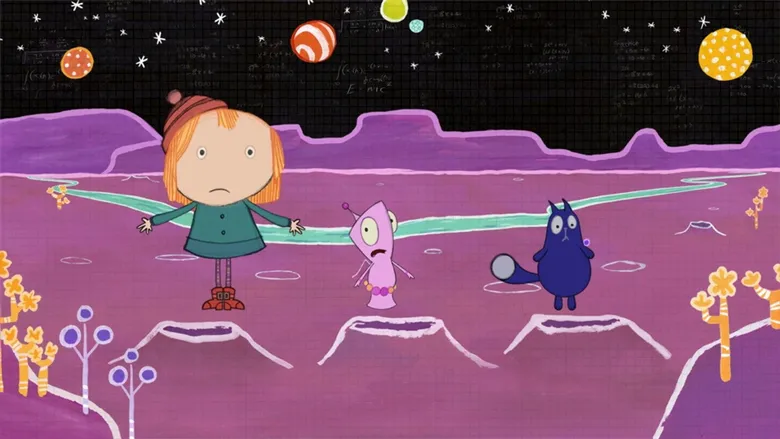
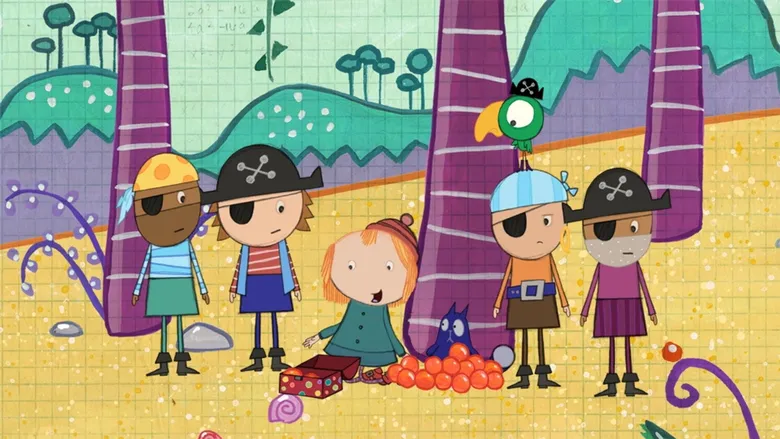
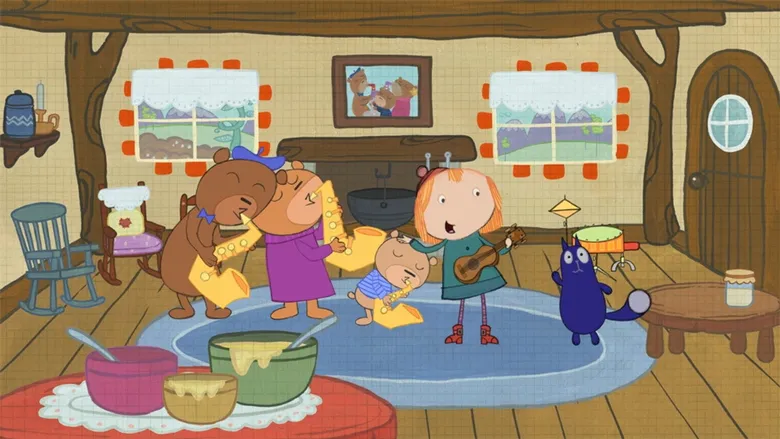
Peg and her cat host a sleepover for four pirate guests, but the pirates cannot get to sleep. Using counting and simple addition, the pair solves one hitch after another, from a broken TV remote to a stuck van full of chickens. They count animals all the way to twenty and reassure the homesick, scared pirates until everyone drifts off. The episode closes with a song and dance about counting past ten.