





























This program is stimulating. It actively demands attention and can feel intense. For the recommended age, this may be on the more intense side.
The pacing is fast. Images follow each other quickly, leaving little time to pause and take in what is happening.
The sound is intense and continuously present.
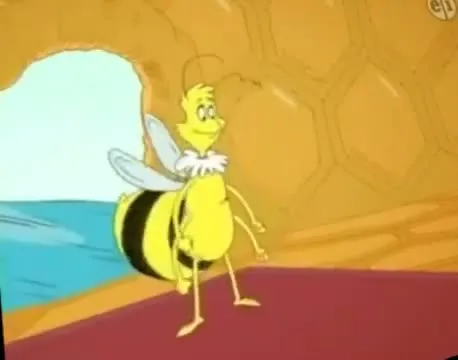
The visuals are busy, with a lot of movement and frequent changes.
One clear goal carries the main story: Tucker the hermit crab needs a new home, and every scene builds toward finding one, which makes it easy to follow. Events unfold in a sensible order with a recognizable beginning, middle and end, and each shell that is tried teaches a simple lesson about why it does or does not fit. New facts about hermit crabs, tide pools and camels arrive steadily without piling on too much at once for this age. The small caveat is the separate fiddler crab and camel segment tacked on at the end, which briefly steps away from the central thread.
The tone stays warm and supportive throughout, with the Cat, Sally and the sea creatures all rallying to help Tucker rather than competing or teasing. Emotional bumps are gentle and quickly soothed: when Tucker bruises himself on a hat, Sally immediately promises to protect him, and his repeated disappointment over ill-fitting shells is met with 'never give up' encouragement. Characters behave consistently and kindly, and every wobble of frustration lands on a reassuring resolution before the moment passes. This makes for an emotionally safe watch for a young preschooler.
The whole episode is a visible problem-solving chain: Tucker names what he needs, the group tries a sandcastle, a hat, Sally's shell and several tide-pool shells, evaluates why each fails and adjusts. The breakthrough is a real piece of reasoning, swapping Basil into Tucker's outgrown shell so Tucker can take Basil's, which children can follow step by step. Sally and Tucker drive much of the effort themselves, though the Cat supplies the transport and some of the nudges, so initiative is shared rather than fully child-led. The cause-and-effect logic behind each fitting attempt is clear and rewarding.
Language is mostly clear and concrete, with plenty of short exchanges a three-year-old can follow, and repeated ideas like 'super duper special shell' that reinforce meaning. The heavy Seussian rhyming and invented words, 'Thingamajigger', 'Wiki Washu', 'shrinkamadun', 'jigger-ma-whizzer', add rhythm but also stretch beyond concrete vocabulary and can blur meaning at this age. Alongside the informative talk about shells and camels there is a fair share of expressive filler like 'woohoo', 'yippee' and 'ha ha'. Sentences are generally complete and well formed, but the nonsense-word density is the clear limiting factor here.
Real knowledge sits at the core, hermit crabs outgrow shells and swap them, camels store water and fat in their hump, and a fiddler crab walks sideways, all genuinely useful for a curious child. That value is wrapped in a lot of fantasy, though: a talking cat, a flying vehicle, shrinking to crab size and chatty sea creatures dominate the screen, which pulls the world well away from everyday life for a three-year-old. Directly imitable actions are thin on the ground beyond building a sandcastle and the idea of sharing and helping a friend. The recognizable social threads, asking mom for permission and cooperating to solve a problem, are the strongest real-world anchor.
More information
This score shows how inclusively the series portrays diverse people, families and cultures. Scale: Limited → Varied → Rich → Inclusive.
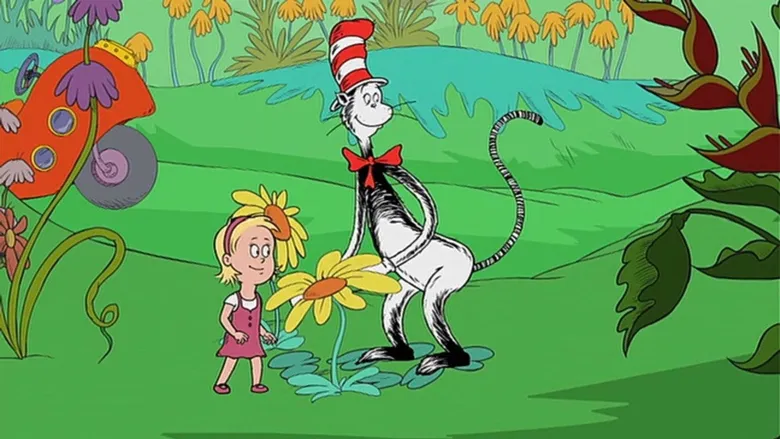
The two children at the centre, Nick and Sally, differ in skin tone and hair, so a Black boy and a white girl share the lead as equal friends. Beyond them the human world is small, with only a mother briefly at home and no real range of ages, body types or family situations on screen. What stands out is how the two share the story: both are curious, both take initiative, and Sally is the one who spots the hermit crab and keeps working the problem until Tucker finds the right shell. Roles and feelings are spread freely between the two rather than following a fixed pattern.
This score shows whether the series stays close to everyday reality or leans into fantasy. Scale: Fantasy → Mixed reality → Realistic.
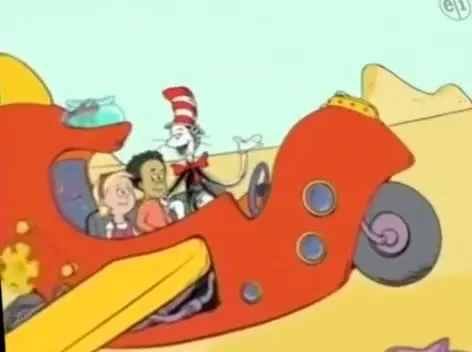
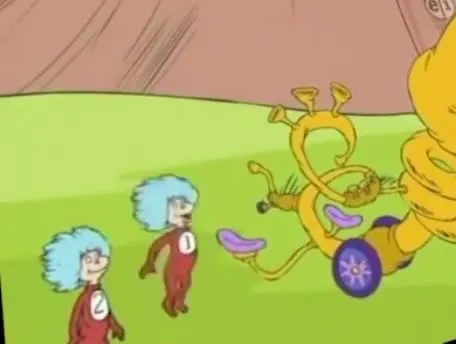
This episode mixes recognizable places with a good deal of imagination. Nick and Sally start in an ordinary backyard, then travel to a beach, a tide pool, and a desert, all real settings, but they get there in a magic flying machine and shrink down small to meet talking crabs, fish, and a camel. There is no villain anywhere. The story's tension comes entirely from a friendly problem, helping a hermit crab named Tucker find a shell that fits, and the invented gadgets follow steady rules throughout. For a three year old the talking animals and shrinking are more make-believe than the mostly realistic mix this age fits best, though the real animal facts keep it grounded.
This score shows how enjoyable the series is for parents watching along. Scale: Tedious → Tolerable → Pleasant → Enjoyable.
This episode is a comfortable watch for a grown-up in the room. The polished Seuss-style animation, the Cat's theatrical rhyming, and a clear little quest for Tucker the hermit crab give a parent enough to follow and admire, even if the humor stays mostly pitched at the child. Voices are lively without turning shrill, and the craft is consistent throughout. It rewards a co-viewing adult more through its look and rhythm than through jokes aimed squarely at you.
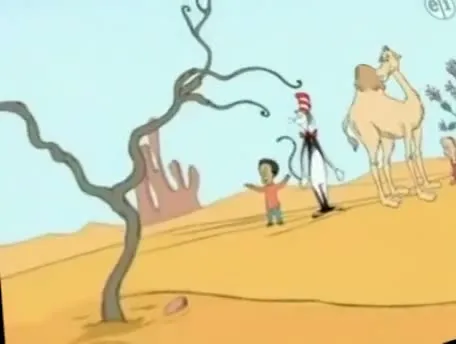
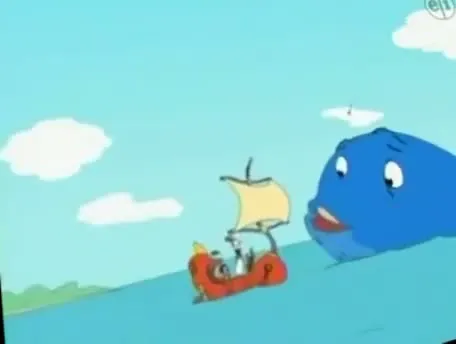
Nick and Sally set out to find Sally a special shell and, with the Cat in the Hat, fly to the beach at Wiki Washu. There they meet Tucker, a hermit crab who has outgrown his shell and needs a new home he can carry. After trying a sandcastle, a hat and many tide-pool shells, they solve it by having big Basil take Tucker's old shell so Tucker can move into Basil's. The episode closes with a short Hat Chat about how a fiddler crab walks sideways and an interview with Carmella the camel about surviving the desert.