





















This program is well-balanced. It remains mostly easy to follow and process. It is a good fit for the recommended age.
The pacing is moderate. The story remains easy for a child to follow.
The sound is clearly present and regularly draws attention.
The visuals are calm and well-organized.
One clear storyline carries the whole episode: the Pod Squad must give away a hundred muffins before they lose their flavour. Events build in a logical order, from the cancelled party to the door-to-door attempt to the final scent-spreading plan, so it is easy to follow what is happening and why. Cause and effect are spelled out plainly, such as crowded steam needing to escape and carrying the smell across town to the hungry Doozers. The one caveat is that a few ideas, like the senses lesson, arrive close together, asking a younger child to hold several new concepts at once.
The emotional tone stays warm and upbeat from start to finish. Characters support one another, Baker Timberbolt trusts the children with a real task, and the Professor encourages rather than corrects. The mild worry of muffins going to waste is settled quickly and happily, so there is little real tension and any small frustration is soon resolved. Excitement runs high in the song and celebration moments, which is the main thing to keep an eye on for a sensitive child, though none of it tips into distress.
The Pod Squad works a problem through from start to finish in front of the viewer. They name the goal, try handing muffins out one by one, notice it is too slow, ask the Professor for ideas, then design and build a device to spread the scent. The first plan visibly falls short and they adjust, which shows children that a good idea can come after one that did not work. The task is handed to them by the baker rather than chosen by them, but the thinking and building that follow are entirely their own.
The dialogue carries real content, from the baker explaining why the muffins spoil to the Professor describing how taste, smell, sight and touch help us explore the world. Full sentences are common and most words fit a four-year-old, with richer terms like 'scrumptious' and 'bellows' introduced in context. The drawback is the delivery: lines come quickly, the script leans on many invented words such as 'smackleberry' and 'Bellow Smello Blaster', and the song refrains add a lot of cheering and exclamations that carry little meaning. That makes some stretches harder for a young child to follow clearly.
There is genuine real-world value here: using all your senses to explore, sharing food so none goes to waste, and the everyday family and community life of a baker, his daughter and their neighbours. Those ideas carry over into a child's own day. The limitation is that most of the action lives in an invented world of small creatures, a podmobile and a giant scent-blasting machine, so the actual steps a child sees on screen are not things they can copy at home. The senses lesson and the message about not wasting food are the parts most likely to land off-screen.
More information
This score shows how inclusively the series portrays diverse people, families and cultures. Scale: Limited → Varied → Rich → Inclusive.
This is a town of small creatures who build and invent together, led by a mixed group of girls and boys who share every task as equals. Because everyone belongs to the same single creature species, there is no human cultural, ethnic, or family diversity to speak of, and the variety comes mainly from different jobs and a few colour differences. Within that limit, the role distribution is genuinely even, with initiative and hands-on work spread across the team rather than tied to one type. The adult experts who guide them, a baker and a professor, both happen to be male, the one mild pattern in an otherwise balanced cast.
This score shows whether the series stays close to everyday reality or leans into fantasy. Scale: Fantasy → Mixed reality → Realistic.
The series unfolds in an invented world of small builder creatures called Doozers, yet most of what happens is drawn from everyday life: baking, sharing food, and putting together a simple machine. There is no villain anywhere. The story turns on a practical problem, getting a hundred smackleberry muffins eaten before they lose their flavor by tomorrow, and every character cooperates to solve it. The fantasy stays light and internally consistent, with the muffin-scent invention working through real ideas about trapped steam and a bellows pushing air, which fits a four-year-old comfortably.
This score shows how enjoyable the series is for parents watching along. Scale: Tedious → Tolerable → Pleasant → Enjoyable.
The Doozers set out to give away a hundred muffins before they lose their flavor by the next day, and the little engineering story holds together well enough for an adult to follow from start to finish. Production is the strong point, with clean 3D animation, expressive characters and a consistent, colorful world. There is not much aimed directly at a grown-up watching along, beyond some food wordplay and a brief gag about a Professor pressing a muffin to his ear to 'listen' to it. The constant upbeat refrains and the busy, saturated palette can start to wear on adult ears and eyes across a full sitting.
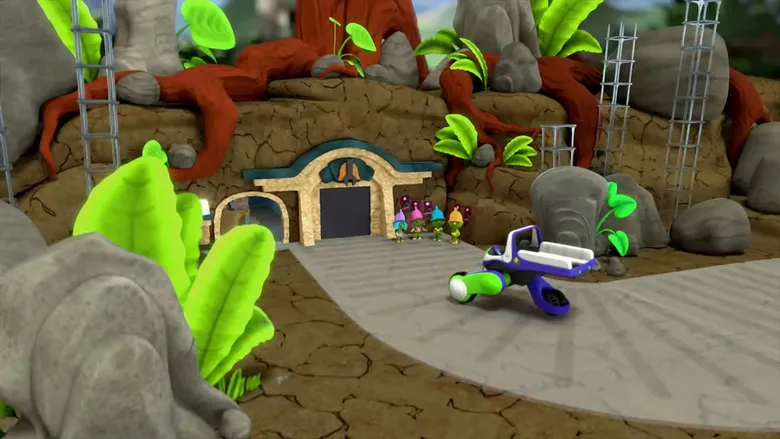
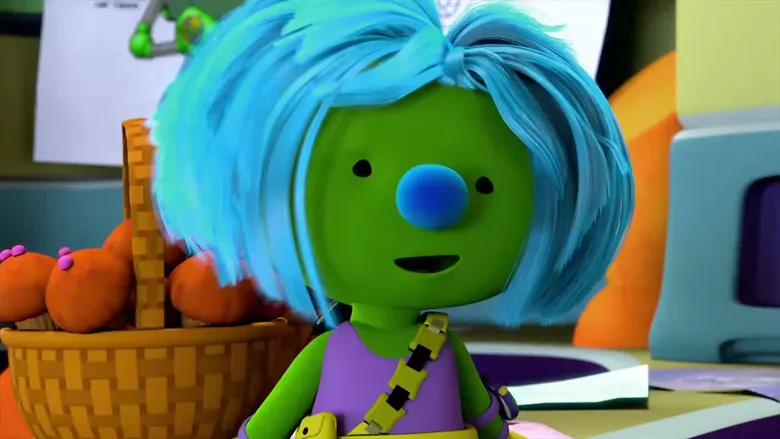
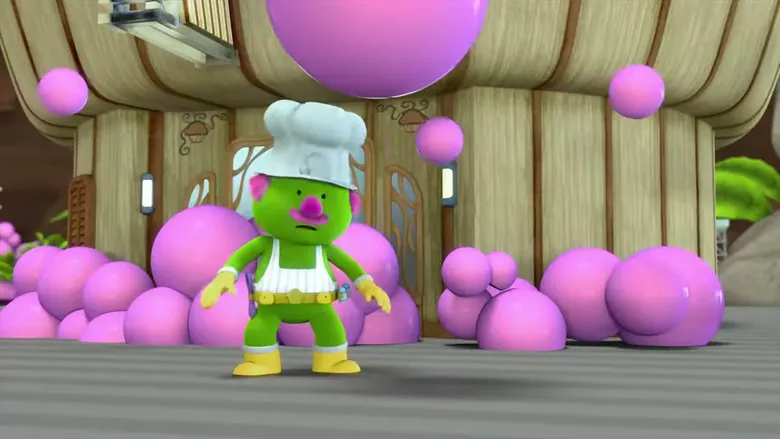
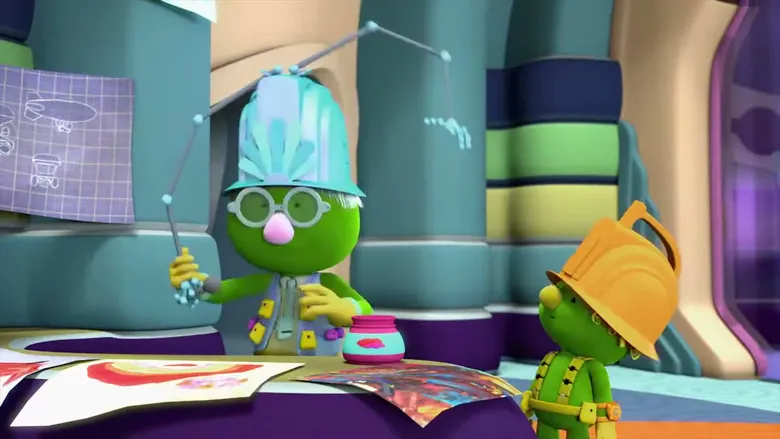
In the Doozer Creek bakery, a large order is cancelled and Baker Timberbolt is left with a hundred Smackleberry muffins that will lose their flavour by tomorrow. He hands the problem to the Pod Squad, four young Doozers named Molly, Spike, Daisy Wheel and Flex. They first try handing the muffins out door to door, find it too slow, and learn from the Professor that smell travels in steam. They build a Bellow Smello Blaster to spread the scent across town, the hungry Doozers follow their noses to the bakery, and every muffin is eaten.