













This program is well-balanced. It remains mostly easy to follow and process. It is a good fit for the recommended age.
The pacing is fast. Images follow each other quickly, leaving little time to pause and take in what is happening.
The sound is clearly present and regularly draws attention.
The visuals are calm and well-organized.
This episode holds one clear storyline from start to finish: a cleaning machine makes bubbles that get out of hand, and the friends must clear them up. Events follow a logical chain, where switching the machine's controls back and forth makes it break, and trying to fix the mess alone leads nowhere until the group changes approach. The cause-and-effect is easy for a child to follow, with each action producing a result that makes sense. The early rundown of the machine's many functions packs a lot in at once, but the rest stays clear and well-ordered.
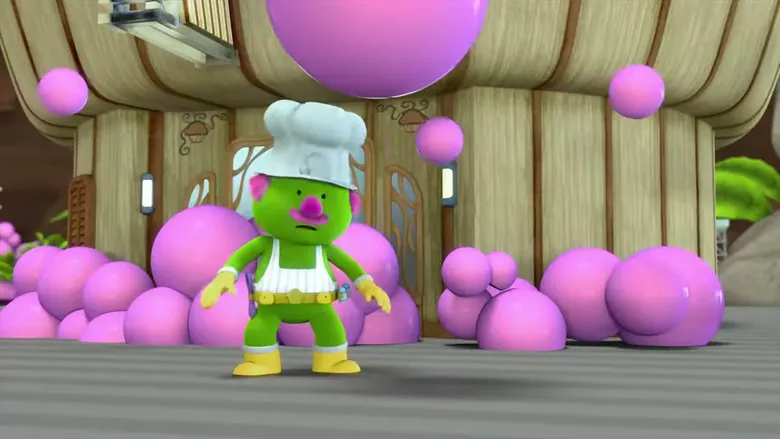
The emotional register stays gentle, with friendly characters who support one another and a patient adult who corrects mistakes kindly instead of scolding. The strongest moments are mild: the friends squabble over who gets to use the machine, and the baker is briefly cross when bubbles block his bakery, yet each settles quickly into reassurance and a fair outcome. After the machine breaks, Professor Gimbal tells them the important thing is that they cleaned it up. The squabbling is framed as the mistake to learn from, which keeps the overall tone safe.
The friends drive much of the problem-solving themselves, since they caused the mess and keep trying ways to fix it. A visible process unfolds as they attempt to pop the bubbles alone, watch it fail, switch to a team approach, then build a vacuum and attach it to their vehicle to clear the bubbles. The reasoning is spelled out clearly, with the characters realising they had each been working on their own. The key insight comes from Professor Gimbal pointing out ants carrying a leaf together, so the children apply an adult's hint rather than reaching it entirely alone.
The language is clear and well-matched to preschoolers, with full sentences and ideas like teamwork explained through a simple, concrete example. New words such as the names for the cleaning machine and the podmobile are introduced in context, so children can work out what they mean. Most dialogue carries real information, describing the plan and what the machine does, though the busy bubble-chasing stretches lean on excited exclamations like 'woohoo' and 'yay'. Speech stays articulate and easy to understand throughout.
The episode is built around a fantasy world of tiny creatures, a magical all-in-one cleaning machine, and bubbles that cannot be popped, so much of what happens cannot be copied in real life. The central message is more grounded: cleaning up a mess you made and joining forces for a big job are ideas a child can carry into daily life. Social dynamics ring true, from friends arguing over a shiny new gadget to a parent guarding his kitchen. The hands-on cleaning is wrapped in invention and chase, which limits how directly the actions transfer off screen.
More information
This score shows how inclusively the series portrays diverse people, families and cultures. Scale: Limited → Varied → Rich → Inclusive.
Doozers takes place in a single community of small, similar-looking creatures, so the variety comes mostly from age and a handful of jobs rather than from different backgrounds or ways of living together. Within that world, the four friends of the Pod Squad, two boys and two girls, share the lead evenly, each inventing, driving, and chasing down the runaway bubbles. The few adults, the inventor Professor Gimbal and a baker, slot into clear helper roles while the children carry the action. The picture stays stable from start to finish, with cooperation rather than a fixed pecking order shaping who does what.
This score shows whether the series stays close to everyday reality or leans into fantasy. Scale: Fantasy → Mixed reality → Realistic.
This is set in an invented world of small builder creatures, and the plot leans on fantastical super-bubbles, so the picture is more imaginative than true to life. What grounds it is the everyday core: cleaning up a mess, a bakery, a farm, and a teamwork lesson drawn from ants carrying a leaf together. There is no villain at all; the trouble comes from an accident and from friends not cooperating, which keeps the conflict gentle and relatable. The made-up elements stay consistent, and the realism and fantasy mix sits comfortably for this age.
This score shows how enjoyable the series is for parents watching along. Scale: Tedious → Tolerable → Pleasant → Enjoyable.
This episode has a genuine story for an adult to follow: the Pod Squad borrows a cleaning machine, fights over the controls, floods the town with bubbles, and learns to work together after watching ants carry a leaf. The production is clean and colourful, with steady 3D animation and a clear sound mix, so it sits as easy background company. The humour and references stay aimed at children, so an adult co-viewer gets little to chew on directly. The excited squad chant and the wall-to-wall pink bubbles bring some busyness, but nothing that grates on adult ears.
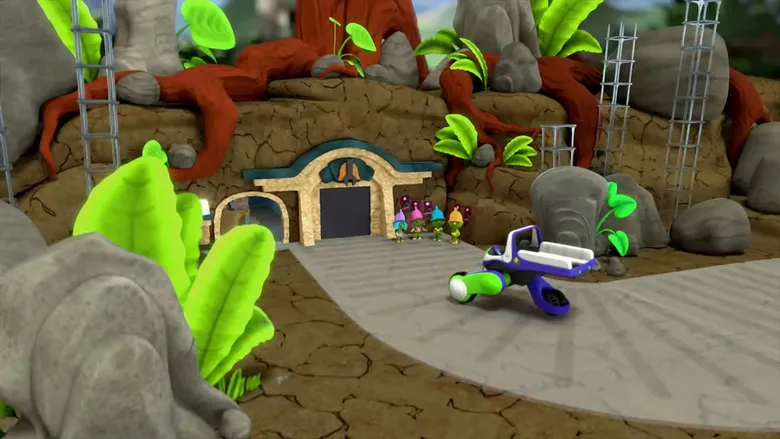
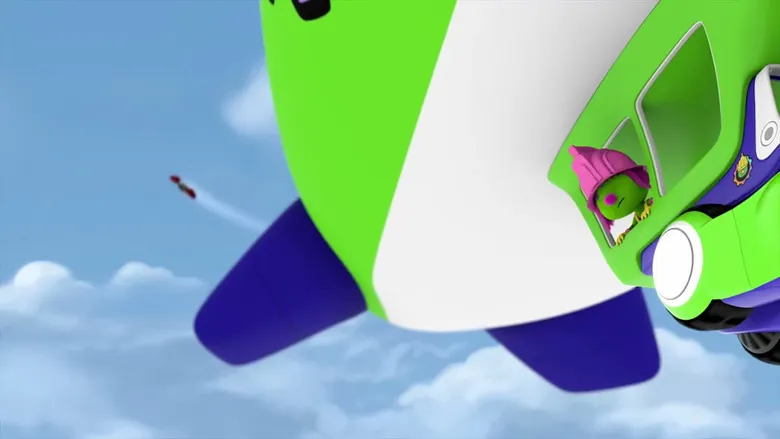
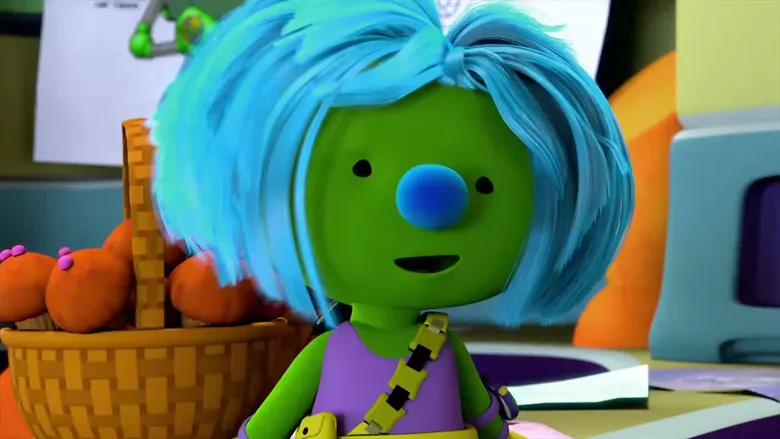
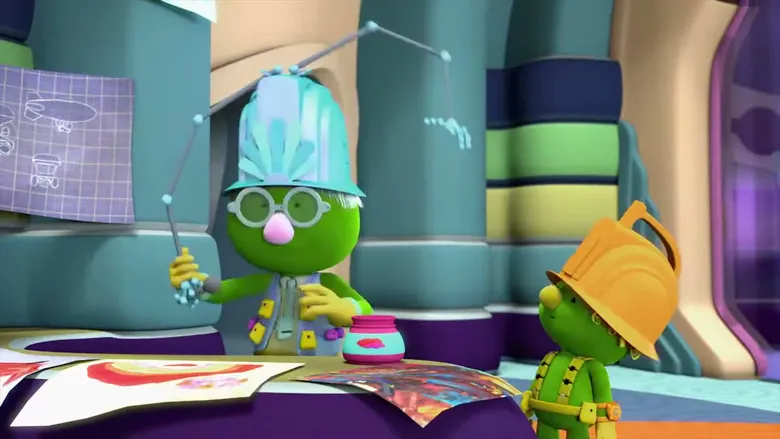
The Pod Squad, Spike, Molly Bolt, Daisy Wheel and Flex, borrow Professor Gimbal's new all-in-one cleaning machine to tidy the old Doozer Depot. They each want to use a different function and keep switching the controls, which breaks the machine and fills Doozer Creek with super-strong bubbles that cannot be popped. After trying to clear the bubbles on their own and failing, they learn from the professor's example of ants working together. They build a super vacuum, attach it to their vehicle, and clean up the bubbles as a team.