













This program is well-balanced. It remains mostly easy to follow and process. It is a good fit for the recommended age.
The pacing is fast. Images follow each other quickly, leaving little time to pause and take in what is happening.
The sound is intense and continuously present.
The visuals are calm and well-organized.
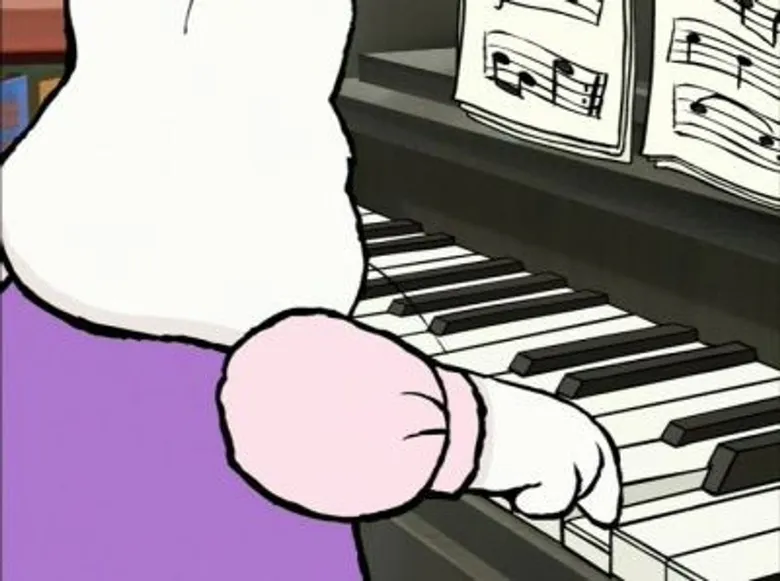
One simple thread runs from start to finish: Ruby works on her piano piece while Max follows his own small plans. Events arrive one at a time with a clear beginning, middle and end, so a young child can follow what is happening without getting lost. Each action leads to an understandable result, like pressing the keys to make music or spreading filling to build a sandwich. Only a little new information appears at a time, which keeps the story easy to hold onto.
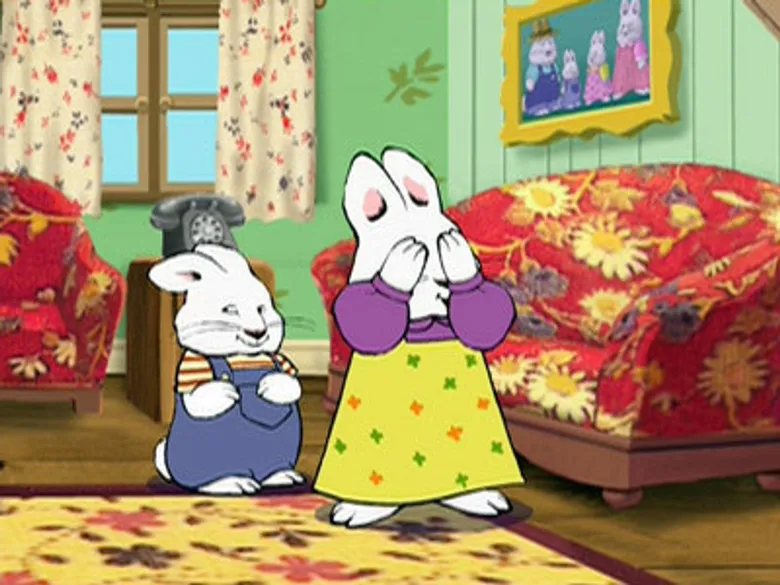
Feelings stay gentle and any small bumps settle quickly. Ruby and Max treat each other with warmth, sharing a hug, and mild moments of frustration give way to calm and a friendly ending. The one caveat is that Ruby can be directive with her younger brother, steering him toward what she thinks is right. Even so, the two stay affectionate and the emotional ground feels safe throughout.
Both characters drive their own activities: Ruby chooses to practise and keeps working at her piece, while Max sets out to make his sandwich and play in his own way. There is a visible sense of trying and repeating to get a little better, which suits a young child's growing independence. Solutions tend to come in a few recognizable steps rather than deeper problem-solving, so the thinking shown stays straightforward. Still, the children clearly act on their own ideas rather than waiting to be told.
The language fits a young listener well. Ruby speaks in short, clear sentences about what she is doing, while Max uses single words and short phrases that match his character. Talk is sparse and mostly tied to the action on screen, so the words a child does hear carry real meaning. Sentences stay simple and concrete, with little abstract or filler chatter, though Max's brief utterances lean more expressive than informative.
The activities connect straight to everyday life. Practising an instrument, reading along to music and making a sandwich in the kitchen are all things a child can recognize and try at home. The home setting, the daily routines and the back-and-forth between an older and a younger sibling mirror real family life. The characters are rabbits rather than people, a small touch of imagination, but everything they do stays grounded in the real world.
More information
This score shows how inclusively the series portrays diverse people, families and cultures. Scale: Limited → Varied → Rich → Inclusive.
This is a small, homogeneous world: every character is a rabbit with the same white-furred look, set apart only by clothing colour, living in one suburban home where a grandmother is the caregiver and the parents never appear. There is little here to broaden a child's picture of how different people look or live, with age being the main point of variation, from the young siblings to the grandmother. The story shares initiative between the organising older sister Ruby and her playful younger brother Max, and neither tasks nor feelings are tied to gender. The clearest limitation is how fixed those sibling roles stay, repeating the same planner-versus-disruptor pattern from scene to scene.
This score shows whether the series stays close to everyday reality or leans into fantasy. Scale: Fantasy → Mixed reality → Realistic.
The world here is almost entirely drawn from a young child's daily life: a home with a piano, a wall of books, a cosy living room, and the small drama of Ruby trying to practice while her little brother Max keeps interrupting. The only imaginative touch is that Max and Ruby are rabbits who talk and live like people, a premise that stays steady from start to finish. There is no villain anywhere; the friction comes from ordinary sibling moments, not from any bad character. For a three-year-old this gentle, recognizable mix of real-life routine and light make-believe is a comfortable fit.
This score shows how enjoyable the series is for parents watching along. Scale: Tedious → Tolerable → Pleasant → Enjoyable.
Max and Ruby is easy to sit beside but offers the adult co-viewer little of its own. The story is a simple, predictable arc built largely on repetition, and the humor stays aimed squarely at young children. What helps is the calm presence: soft piano, an unhurried pace and a clean storybook look. The main wear over time comes from Ruby's insistent, bossy tone and the practice phrases repeating as she works.
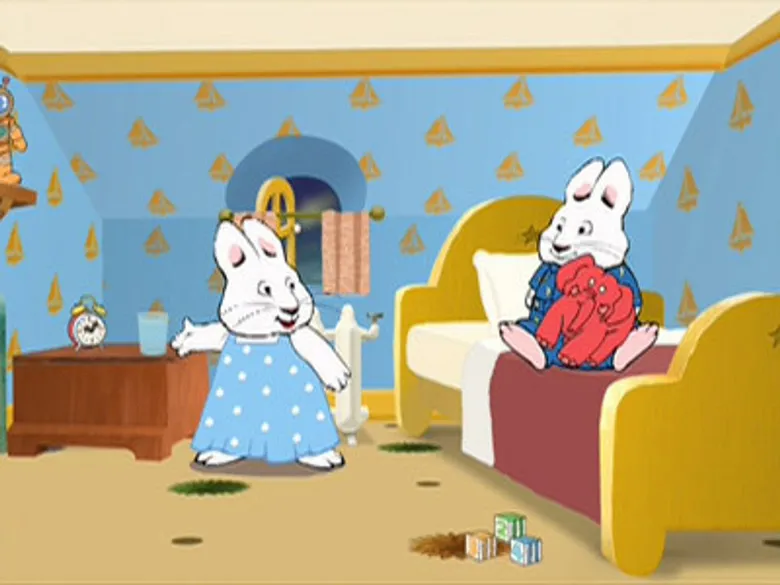
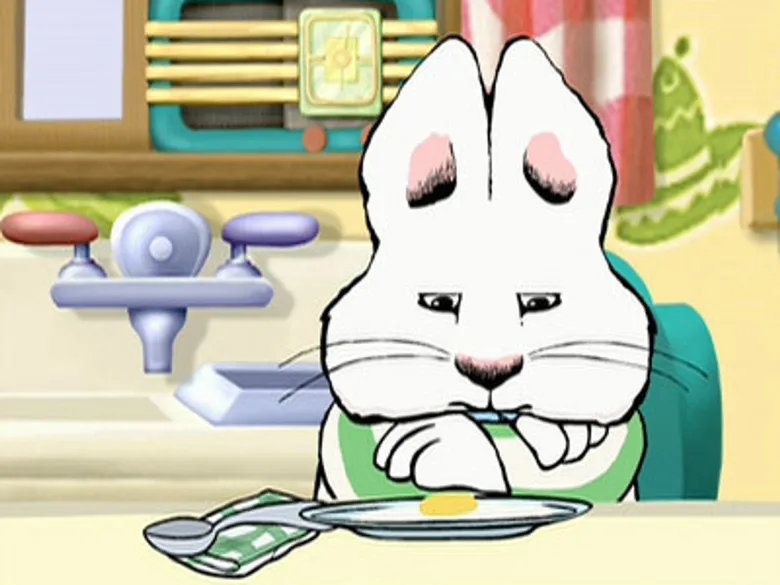
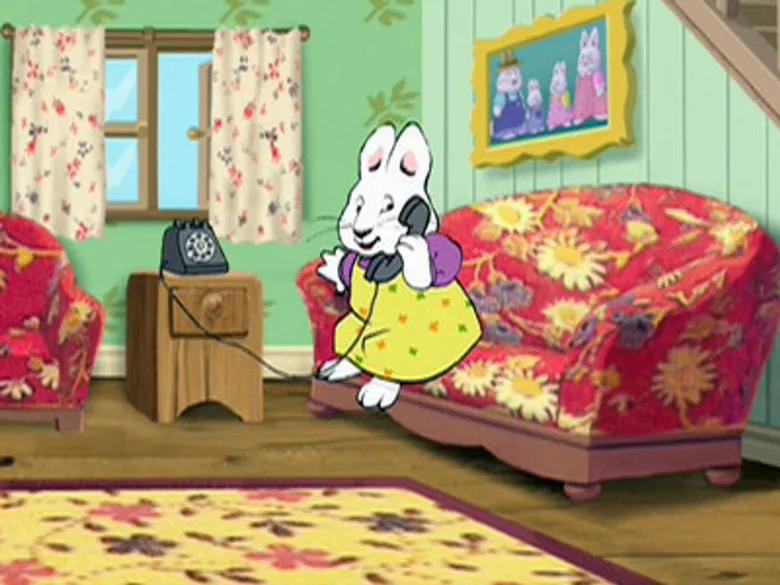
Ruby settles in to practise her piano piece, reading sheet music and keeping time with a metronome, while her younger brother Max busies himself with his own plans, including making a sandwich in the kitchen and playing with a favourite red toy. The two rabbits move between the living room, the kitchen and the hallway of their home, with a brief moment outdoors. Their small differences play out gently as Ruby keeps returning to her practice. The episode closes with the siblings together.