















This program is well-balanced. It remains mostly easy to follow and process. It is a good fit for the recommended age.
The pacing is fast. Images follow each other quickly, leaving little time to pause and take in what is happening.
The sound is intense and continuously present.
The visuals are calm and well-organized.
One simple question carries the whole episode: where is Max hiding. Ruby works through the house one room at a time, so events follow in a clear order with a recognisable beginning, middle, and reunion at the end. Each scene adds only a little that is new, usually a fresh place to look, which keeps the story easy for a young child to hold onto. Actions lead to sensible results, such as a peek behind the radiator or a plant turning up a hidden brother.
Feelings stay on an even keel. The game brings only mild moments of impatience when Max cannot be found, and these settle as Ruby keeps looking and the two end up together in the garden over a plate of cookies. Emotions shift gradually rather than swinging between extremes, and the tone between the siblings is mostly warm. The small caveat is that Ruby can be directive and a little bossy as she runs the game, though she never turns unkind.
The children run their own game without any grown-up stepping in. Max decides where to tuck himself away, and Ruby thinks through likely hiding spots, checking one place, ruling it out, and moving to the next. This gives a visible, if simple, problem-solving thread that suits a young child. The solving stays light, since finding someone is a straightforward goal, but the initiative clearly belongs to the children themselves.
Ruby speaks in short, clear sentences with everyday words a young child knows, naming rooms and describing where she is looking. Her language is functional and easy to follow. Max says very little, often a single repeated word, so much of the meaning comes from what is shown rather than spoken. Speech is clear throughout, though the sparse dialogue means language carries less of the episode than the action does.
Hide and seek is a game children play in real life, and almost everything here transfers straight off the screen: searching a house, hiding behind furniture, sharing cookies afterwards. The home, the rooms, and the objects are all recognisable from daily life, with the only imaginative layer being that the characters are rabbits who talk and dress like people. The sibling relationship and cooperative play mirror real family patterns closely. For this age, that light touch of make-believe sits comfortably alongside the real-world activity.
More information
This score shows how inclusively the series portrays diverse people, families and cultures. Scale: Limited → Varied → Rich → Inclusive.
This episode stays inside one home with two rabbit siblings and almost no one else, so there is little variety in age, background or family type on display. Within that small cast, Ruby and Max share the story fairly evenly: she sets up and runs the hide-and-seek game while he keeps surprising her, and both move through a real range of feelings. The setup leans on the familiar pattern of the organising older sister and the little brother who gets his way, softened by the fact that Max clearly holds his own. The result is narrow in who appears, with role-sharing between the two leads that is reasonably balanced.
This score shows whether the series stays close to everyday reality or leans into fantasy. Scale: Fantasy → Mixed reality → Realistic.
The world of Max and Ruby is an ordinary home where two rabbit siblings play an everyday game of hide and seek through familiar rooms and hallways. The only imaginative touch is that the family are rabbits who talk and behave like people; everything around them, the armchairs, bookshelves and kitchen, comes straight from daily life. No villain appears, and the gentle give and take between mischievous younger Max and his older sister Ruby drives the story without anyone being cast as bad. This blend of recognizable settings and light imagination fits a three-year-old comfortably.
This score shows how enjoyable the series is for parents watching along. Scale: Tedious → Tolerable → Pleasant → Enjoyable.
This is a calm, child-pitched episode that a parent can comfortably tolerate rather than actively enjoy. The story is a light loop of Ruby organizing a game of hide and seek while Max keeps following his own plan, with little underneath for an adult to dig into. The clean flat animation, bright palette, and even voices make it easy to have on in the room, with only Max's repeated words and Ruby's insistent tone as minor irritants. There is not much layered humor or plot here for a grown-up co-viewer, but nothing grates either.
Themes
Play
Central
Max and Ruby spend the whole episode playing a game of hide and seek through the house and garden
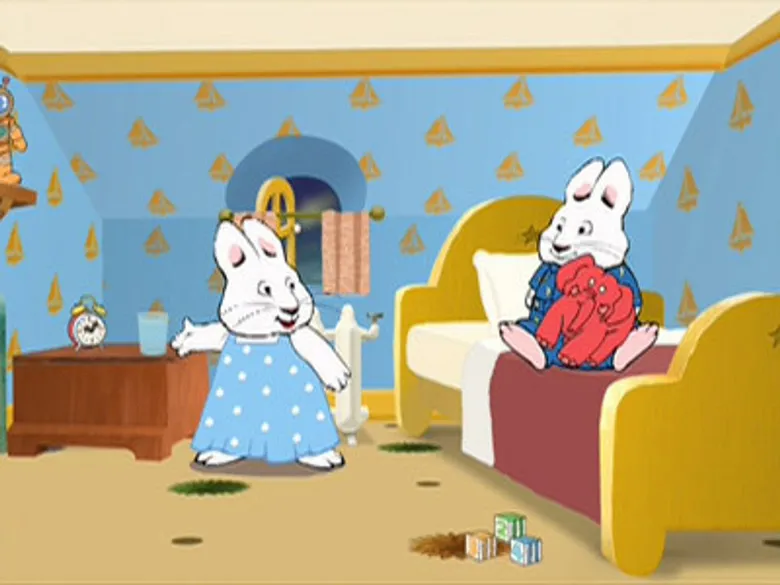
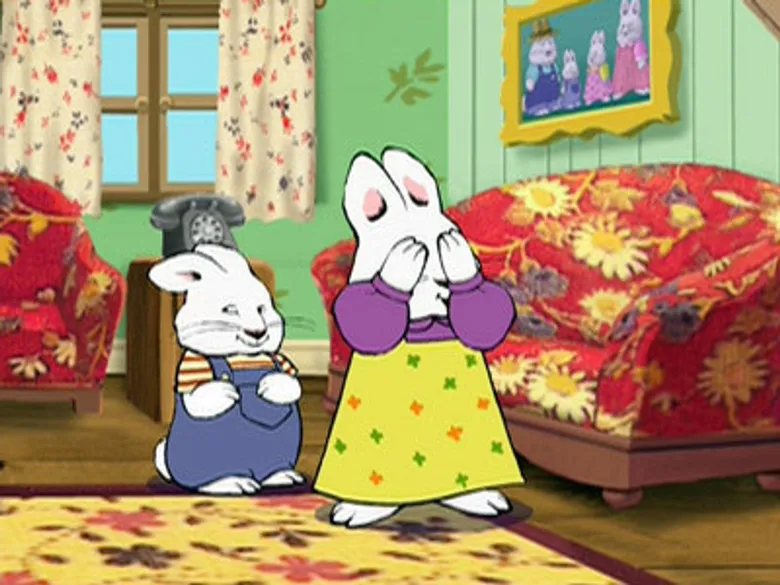
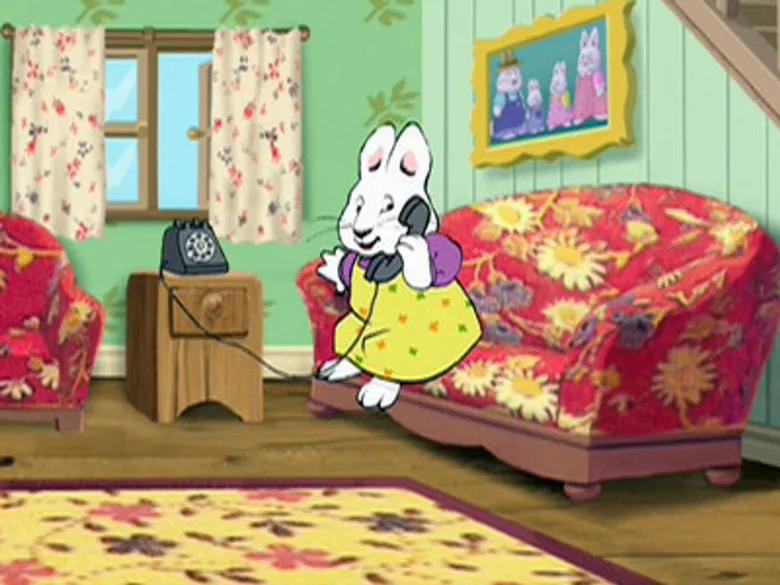
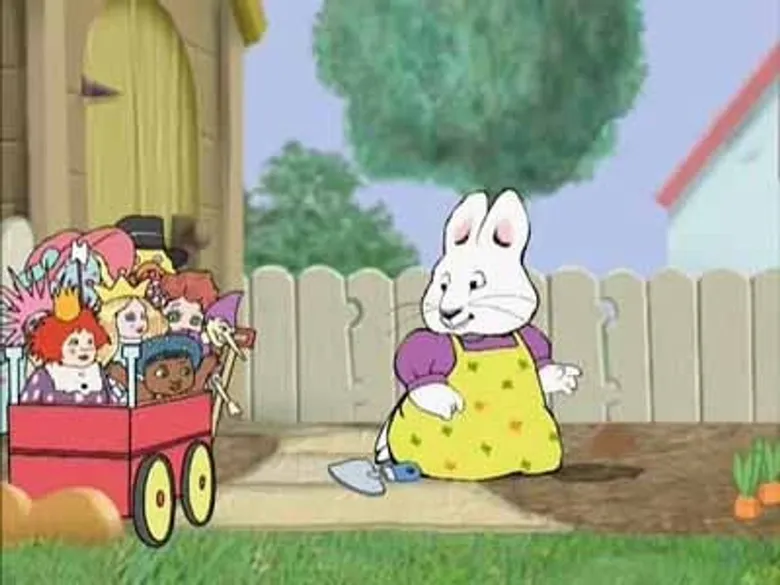
Max and Ruby, two rabbit siblings, play a game of hide and seek through their home. Max hides behind plants and furniture while his older sister Ruby searches room by room, from the living room and staircase to the kitchen. Along the way Max plays with his toys, including a small red jester doll. The game ends outdoors in the garden, where Ruby brings a plate of cookies and the two are back together.