
























This program is well-balanced. It remains mostly easy to follow and process. It is a good fit for the recommended age.
The pacing is fast. Images follow each other quickly, leaving little time to pause and take in what is happening.
The sound is soft and supportive.
The visuals are calm and well-organized.
The episode follows one clear thread as Rosie and her friends work out how to enjoy the park together. Events build in a recognizable order with a beginning, middle and end, and each new idea connects to what came just before. Concepts about fairness and sharing arrive a few at a time, which keeps the story easy to follow, with only occasional moments where several ideas land close together. Actions lead to consequences a child can predict.
Feelings stay gentle and well-regulated, with disagreements about taking turns handled through talking rather than shouting. The children treat each other with respect, and when small frustrations surface they are settled soon after with a fair solution. Rosie can be insistent about her own ideas, but the story consistently steers her toward listening to her friends. Nothing tips into upset that is left unresolved.
Rosie drives the action through her own curiosity, setting out to solve the puzzle of how a park can work for everyone. She names the problem, tries ideas, and adjusts when something does not work, often picturing possibilities in her imagination before acting. Her friends add their own suggestions, so solutions come together in visible steps rather than being handed to her. The cause-and-effect behind each choice is shown clearly enough to follow.
The dialogue uses clear, complete sentences with vocabulary that fits a five-year-old, introducing community words through the situation so their meaning is easy to grasp. Talk is the heart of the episode and stays crisp and purposeful, with most lines giving information, asking questions or describing a plan. Rosie puts her thinking into words in a way that models how to explain an idea. Expressive filler is rare.
The episode connects directly to everyday life, showing a neighborhood park where children negotiate fair turns and shared space. Many of the actions, taking turns on the slide, planning together and listening to friends, transfer straight to a child's own playground. Imagination sequences add flights of fancy, but they sit inside a recognizable world of family, friends and community. The social situations follow patterns children will know from their own days.
More information
This score shows how inclusively the series portrays diverse people, families and cultures. Scale: Limited → Varied → Rich → Inclusive.
This episode follows a brown-skinned Latina girl and the children of her neighborhood as they explore a park, and the cast reflects a community of different skin tones, hair textures and ages. Boys and girls play and figure things out side by side, sharing both the initiative and the full range of feelings, while adults step in to help rather than take over. The diversity sits naturally in the everyday setting instead of being pointed out as special. The main limit is that the variation centers on brown-skinned characters and familiar cartoon body types, but within that the picture is broad and even-handed.
This score shows whether the series stays close to everyday reality or leans into fantasy. Scale: Fantasy → Mixed reality → Realistic.
This episode is built almost entirely from everyday life: Rosie, her family, and friends spend time at a neighborhood park with swings, slides, and climbing frames. A few short moments show Rosie picturing ideas in her head, like the Earth in space or a rainbow, but these stay clearly marked as her own imagination and the real world always returns. There is no villain and no hero-versus-bad-guy story; the small problems come from ordinary situations like figuring out what a new park needs and sharing space with others. The realistic setting with light, well-signposted imagination is a comfortable fit for a five-year-old.
This score shows how enjoyable the series is for parents watching along. Scale: Tedious → Tolerable → Pleasant → Enjoyable.
This episode is a polished, warm watch built around a clear little story of Rosie exploring a new park and working out what makes it function. The craft is strong and it sits easily in the room, with bright but soft visuals, pleasant voices, and playful touches like the imagination scenes. There is little written for an adult co-viewer beyond the family's Spanish phrases, and Rosie's constant high-energy narration can tire over a full run. For a parent in the room it holds up well without ever aiming at them.
Themes
Community
Central
The story centers on a neighborhood park that the children share and figure out how to use fairly.
Play
Central
Most scenes take place on a playground with a slide, swings and climbing equipment.
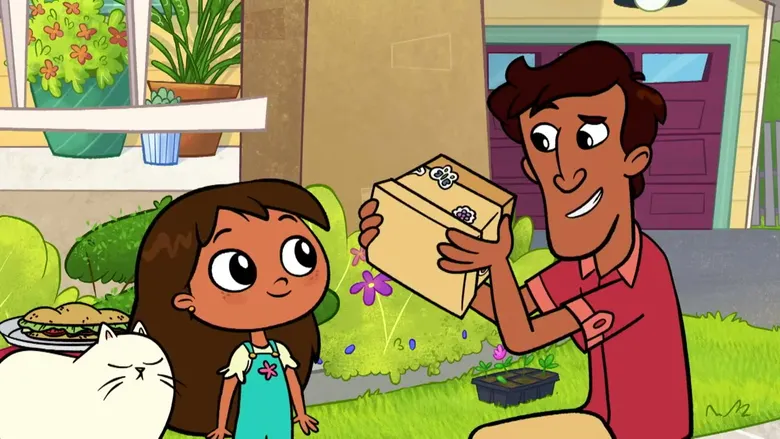
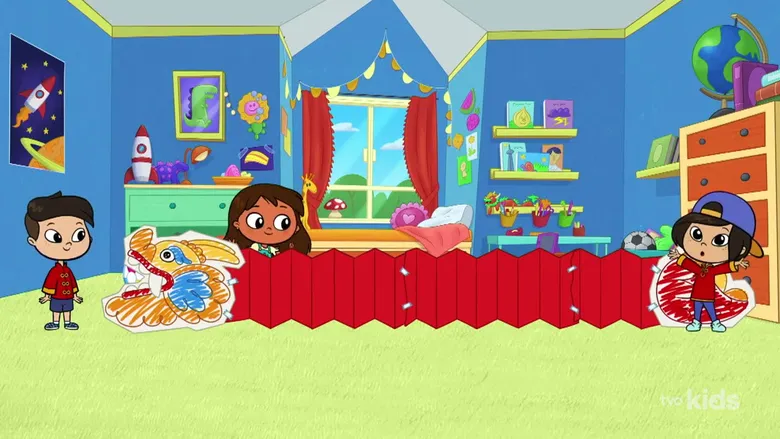
Rosie, a curious girl, and her friends spend the day at a neighborhood park with a slide, swings and climbing equipment. When sharing the play space gets crowded, Rosie sets out to work out fair ways for everyone to take turns, using her imagination to picture how a park can serve a whole community. Her friends add their own ideas, and together they settle on a plan. By the end the children are playing together happily.