



















This program is well-balanced. It remains mostly easy to follow and process. It is a good fit for the recommended age.
The pacing is fast. Images follow each other quickly, leaving little time to pause and take in what is happening.
The sound is soft and supportive.
The visuals are calm and well-organized.
The episode follows one clear thread, Rosie and the white cat Gatita, with events laid out in a recognizable beginning, middle and end. New ideas arrive one at a time and actions lead to sensible results, like the cat leaving a mess that someone then has to deal with, so a child can follow the chain of what happens and why. The amount packed into each scene sits a touch above the simplest level, asking a five-year-old to hold a few ideas at once. The storyline still stays easy to track from start to finish.
Emotions stay in a manageable range: Rosie shows excitement and the odd flash of disappointment, and the adults show concern when something goes wrong, but nothing tips into frightening territory. When a setback creates tension, the episode resolves it soon after with a calm tone and a clear fix, so worry does not linger. Interactions between Rosie, her father, her grandmother and a family friend are warm and consistent, with adults responding supportively rather than mocking or dismissing her. The one small caveat is that Rosie can be quite insistent about her plans, though the story keeps this good-natured.
Rosie drives the action herself, setting a goal around the cat and working toward it instead of waiting for grown-ups to fix everything. Her thinking is visible: she names what she wants, tries an approach and adjusts, and the episode walks through several recognizable steps toward a solution. The reasoning links cause and effect in a way a child can follow, such as connecting the cat's behaviour to the mess that follows. The process could dig a little deeper into trying, failing and rethinking, but the initiative is clearly hers.
The language fits a five-year-old well: full, clear sentences that describe and explain, with new ideas introduced so the surrounding situation makes them understandable. Spanish words like 'Gatita' (kitten), 'Abuela' (grandma) and 'Papá' (dad) are woven in naturally alongside English, giving light bilingual exposure. Speech is clear and the words are used consistently and purposefully, mostly to inform and describe rather than just to exclaim. The dialogue carries real content rather than filler.
The episode roots itself in everyday life: a family home, looking after a pet, helping tidy up and working things out with parents, all of which a child can recognize and copy offline. Activities have a clear purpose and unfold in visible steps rather than as decoration. A few short imaginative interludes appear, but the core world stays realistic and the social situations follow familiar family and friendship patterns. This gives the content a direct line to a child's own day.
More information
This score shows how inclusively the series portrays diverse people, families and cultures. Scale: Limited → Varied → Rich → Inclusive.
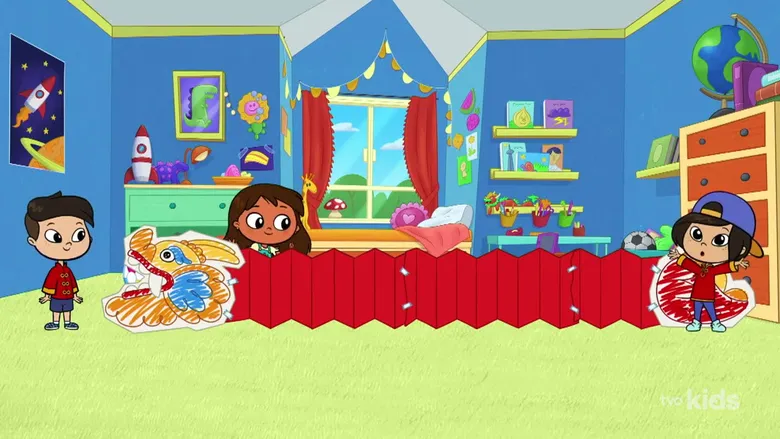
This episode centers on a Mexican-Cuban American family whose home life, language and traditions are woven through every scene, set within a classroom of children from many backgrounds. A grandmother lives with the family and stays closely involved, both parents share in the day, and Rosie leads the action with her own curiosity. Tasks, feelings and initiative are not pinned to gender or character type, and the children cooperate as equals. Diversity here is simply part of how the world looks and works, never singled out for attention.
This score shows whether the series stays close to everyday reality or leans into fantasy. Scale: Fantasy → Mixed reality → Realistic.
Rosie's Rules unfolds in a world children will instantly recognize: a family home, a fluffy white cat, relatives across generations, and the everyday business of caring for a new pet. Conflicts come from real situations like learning what a cat needs, not from any villain, and the people around Rosie are warm and ordinary. Short daydream sequences let Rosie picture ideas in her head, and these are clearly marked off from the real world before she returns to it. The realistic everyday setting with light, well-signposted imagination is a comfortable fit for a five-year-old.
This score shows how enjoyable the series is for parents watching along. Scale: Tedious → Tolerable → Pleasant → Enjoyable.
This is a well-made episode that sits comfortably as background for a parent in the room. The story carries a clear goal and steady momentum, the flat 2D animation is clean and colorful, and the sound stays easy on adult ears. Beyond the bilingual touches and warm family moments, little is written specifically for grown-ups, so the main draw for a co-viewing adult is the polish and the followable plot rather than humor aimed their way.
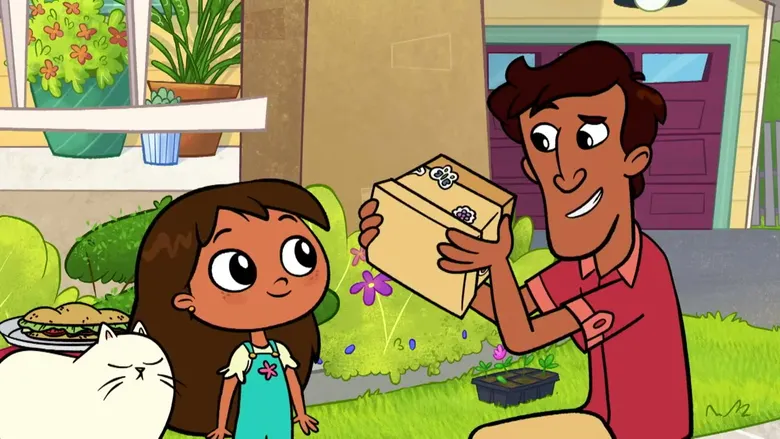
Rosie, a young girl, spends the episode focused on a white cat named Gatita. Set mostly in and around her family home, she makes a plan to care for the cat and works through the problems that come up, such as a mess the cat leaves in a home office, with help from her father, grandmother and a family friend. Spanish words appear naturally alongside English throughout. The story wraps up with the situation resolved before the closing credits.