













This program is stimulating. It actively demands attention and can feel intense. For the recommended age, this may be on the more intense side.
The pacing is fast. Images follow each other quickly, leaving little time to pause and take in what is happening.
The sound is soft and supportive.
The visuals are well-balanced, with a clear overall view.
The episode follows one clear storyline from start to finish, so a child can hold onto what is happening without juggling side plots. Events build in a logical order with a recognizable beginning, middle, and end, and actions lead to consequences a child can predict and follow. This clarity helps young children make sense of the story and stay oriented. The one caveat is that ideas and new details pile up fairly densely for a three-year-old, which asks a lot of the very youngest in the range.
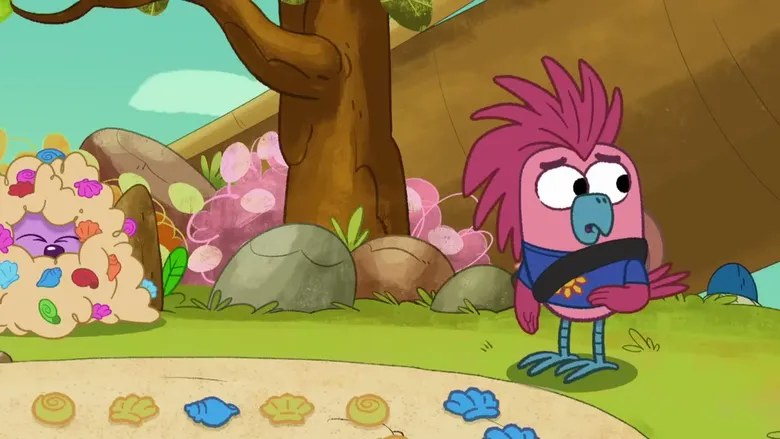
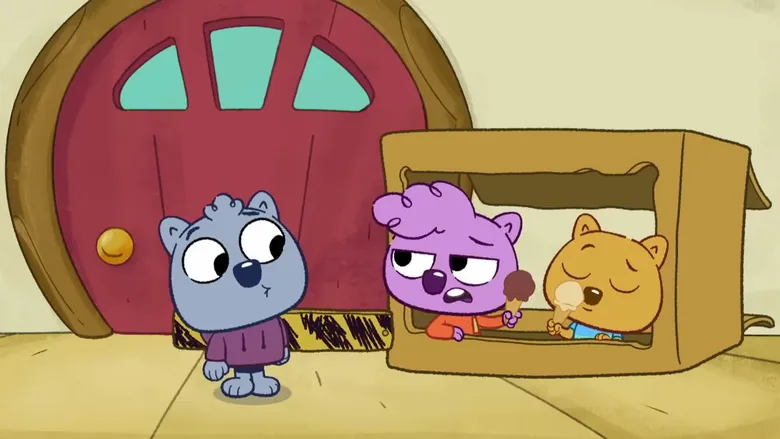
The characters treat each other with warmth and support, and the adult on screen is patient and helpful rather than harsh. Feelings stay mostly gentle, and when the siblings are let down, like the dejected moment outside the seaside house, the upset is soon eased and the problem addressed. This consistency helps a child feel safe and shows that hard feelings pass. The small caveat is that the mood does swing between excitement and disappointment a few times, which can feel like a lot for the youngest viewers.
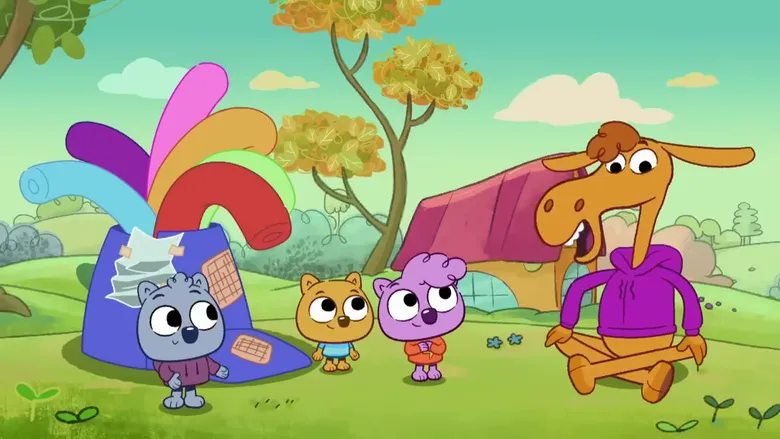
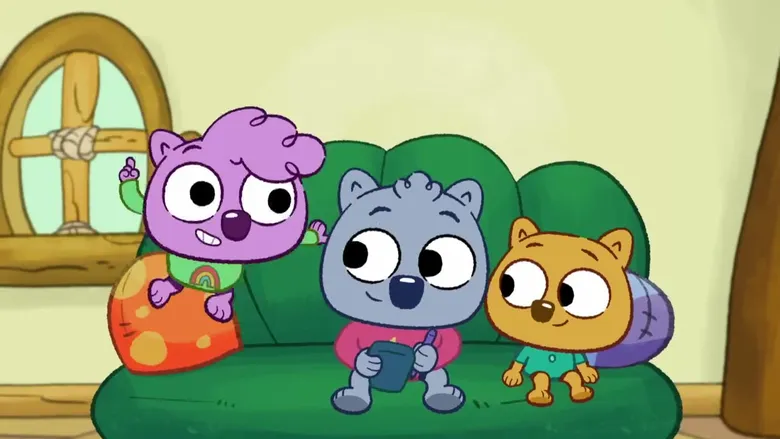
This episode stands out for showing children figuring things out for themselves. The young wombats run into a problem, talk through ideas, try something, and adjust when it does not work, all on their own initiative. A child sees a real thinking process unfold step by step, with setbacks treated as part of the plan rather than failures. Adults stay in a supporting role, leaving the children room to reach the solution and feel the satisfaction of working it out.
Language is conversational and purposeful, with the characters naming what they want to do and describing their plans in complete sentences. Words are used consistently and meaningfully, and most talk carries real information rather than empty exclamations, giving a child clear language to model. The mild caveat is that the lively, child-voiced dialogue is pitched a touch above the very youngest, with sentences that sometimes run longer than a just-three-year-old will catch.
The everyday situations here, family outings, cooperating with neighbors, and sticking with a plan, mirror real life and give a child social patterns they will recognize. The problem-solving strategies, making a plan, trying it, and adjusting, carry over well to a child's own day, and activities have a clear purpose with visible steps rather than filler. The limitation for this age is that it all plays out in an invented animal world by the sea, so the link to a three-year-old's concrete daily reality is a step removed.
More information
This score shows how inclusively the series portrays diverse people, families and cultures. Scale: Limited → Varied → Rich → Inclusive.
The episode unfolds in a shared treehouse community packed with characters of many different animal kinds and ages, from the young siblings to the adult who cares for them. Problem-solving and initiative are spread evenly across the children, with both the sister and the brothers taking the lead, and feelings are shown openly without being fixed to one character type. The family at the center lives across generations, which widens the picture of how a household can look. Cultural background sits more in the voices and the ensemble than on screen, but the range of recurring characters and the balanced roles give a varied, inclusive feel.
This score shows whether the series stays close to everyday reality or leans into fantasy. Scale: Fantasy → Mixed reality → Realistic.
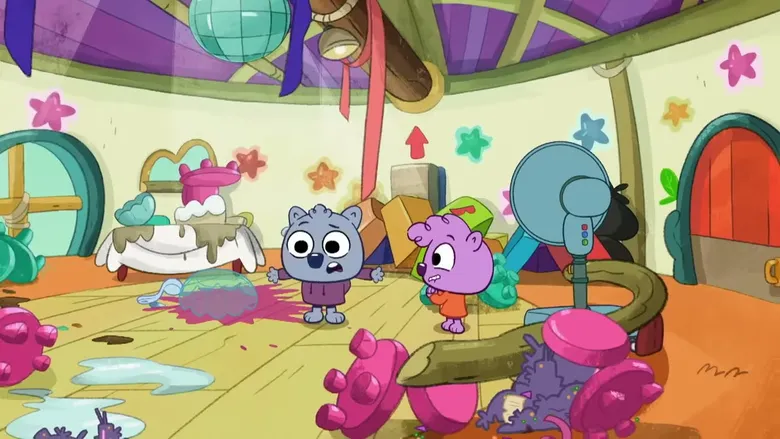
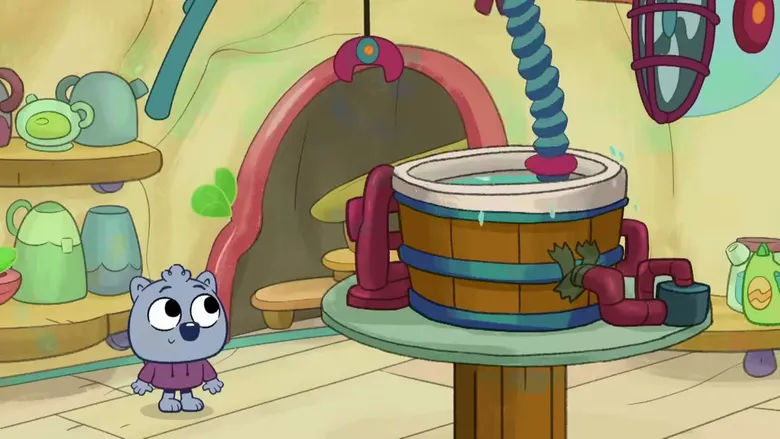
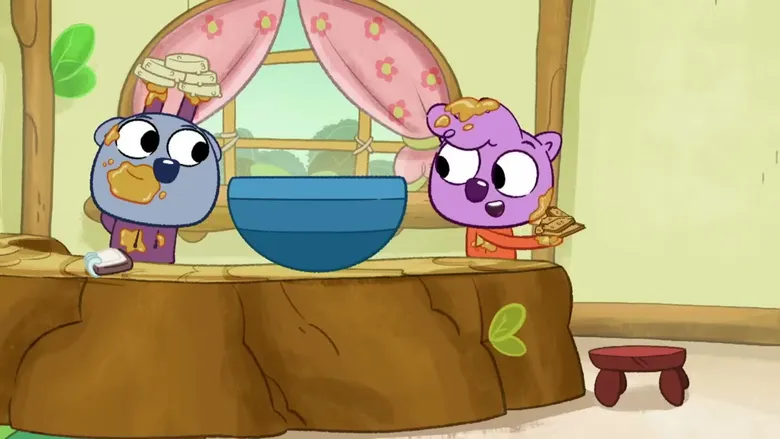
This episode keeps both feet in everyday life. Its world of talking animals plays out in homes, kitchens, bedrooms and a friendly neighborhood of treehouses, where the challenges are small and recognizable, like cooking, building and helping a neighbor. No villain appears; problems grow out of situations rather than bad characters, and they get worked through together. For a three-year-old, the blend of realistic settings with one light imaginative touch is a comfortable fit.
This score shows how enjoyable the series is for parents watching along. Scale: Tedious → Tolerable → Pleasant → Enjoyable.
This is an easy series to share a room with. The 2D animation is polished and the warm voices and soft music keep it pleasant for an adult sitting nearby. Each episode tells a real, if simple, problem-solving story you can follow as the wombats try an idea, watch it fail, and adjust. The jokes and ideas, though, are written for the children rather than the grown-up beside them.
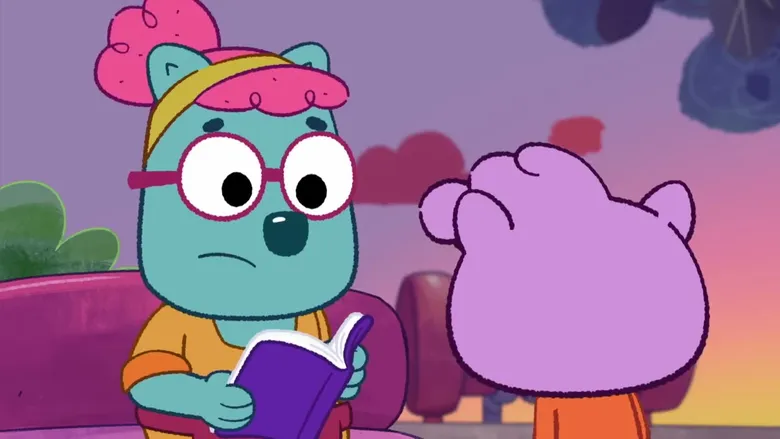
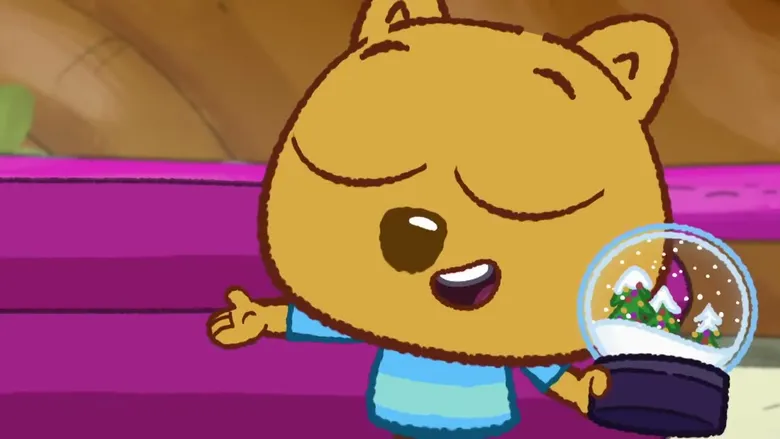
Three young wombat siblings set out from their treehouse community for a day by the sea. When the outing hits a snag, they talk it over, try ideas, and adjust their plan with help from their neighbors and a handy adult. Along the way they meet small seaside creatures and keep working on the problem together. The episode closes with the group reunited and the situation sorted out.