








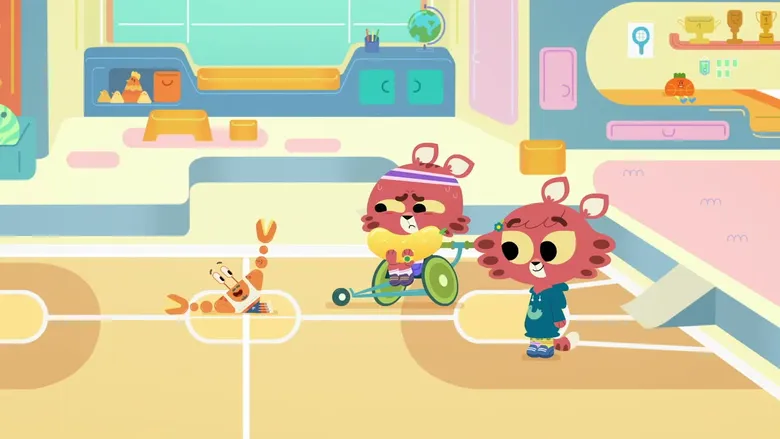
This program is well-balanced. It remains mostly easy to follow and process. It is a good fit for the recommended age.
The pacing is fast. Images follow each other quickly, leaving little time to pause and take in what is happening.
The sound is soft and supportive.
The visuals are calm and well-organized.
One clear question carries the whole episode: what does a cuddly toy really need before you can use the slide. Events build in a simple, repeating order, the sheriff adds a rule, the children go and fix it, then return, so a three year old can predict what comes next. New ideas arrive one at a time (find a toy, give it a name, hug it) rather than piling up. Actions lead to consistent outcomes, which keeps the thread easy to hold from start to finish.
The mood stays warm and low key, with friends cheering each other on and a gatekeeper who is firm but never harsh. When Yeti admits he is scared, and later when Olivia worries about sliding without her toy, the worry is named gently and answered within the same moment. The ending reassures every child that it is fine to want a toy, or not, without anyone being teased for their choice. Feelings shift softly from one beat to the next, so there are no sudden jolts of fear or upset.
The children drive much of the action themselves, deciding to go collect toys, decorate a sock, and invent names. Olivia takes the real initiative by testing whether she can slide with no toy at all, and her success prompts the others to try. The thinking stays simple, mostly a single try and a happy result, which fits a young preschooler but does not show much trial, failure and adjustment. Still, the link between choosing to try and discovering you were brave enough is clear and satisfying.
The dialogue is built from short, concrete sentences about toys, names, hugging and sliding, all easy for a three year old to grasp. Words are used consistently and the voices are clear, so meaning never gets muddy. Playful invented names like the tongue twisting 'Sopasasasuticifusa' add fun without confusing the point. Alongside the descriptive talk there is a fair amount of pure exclamation ('Yay', 'Slide!'), which lightens the tone but carries less information.
The lesson about comfort objects and finding your own courage is genuinely recognizable, and the peer play, decorating and gentle disagreement mirror real childhood moments. Naming and hugging a toy, or bravely trying something without it, are ideas a child can carry into their own day. That said, the story unfolds in a make believe world of talking creatures and a fantastical slide, so the direct real world transfer is partial rather than strong. The activities themselves are more about play and pretend than practical, step by step tasks.
More information
This score shows how inclusively the series portrays diverse people, families and cultures. Scale: Limited → Varied → Rich → Inclusive.
This episode plays out in an invented world of colourful creatures gathered around a giant slide. Because everyone is a fantasy animal, there are no recognisable human origins, cultures or family forms on screen, which keeps the visible breadth narrow. What the episode does well is spread initiative and feeling evenly: the twins Olivia and Stan, a girl and a boy, are both the ones brave enough to go down without a comfort toy, while Sheriff Pearl oversees the slide. Different characters are allowed different needs, and Bigfoot staying scared is accepted rather than mocked, so behaviour is not locked to type.
This score shows whether the series stays close to everyday reality or leans into fantasy. Scale: Fantasy → Mixed reality → Realistic.
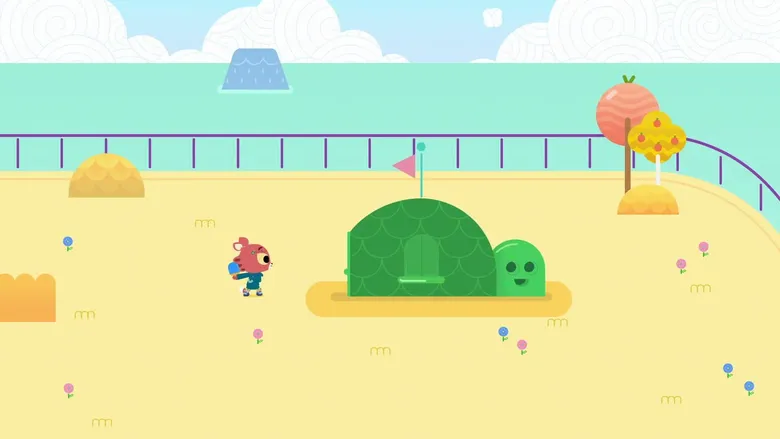
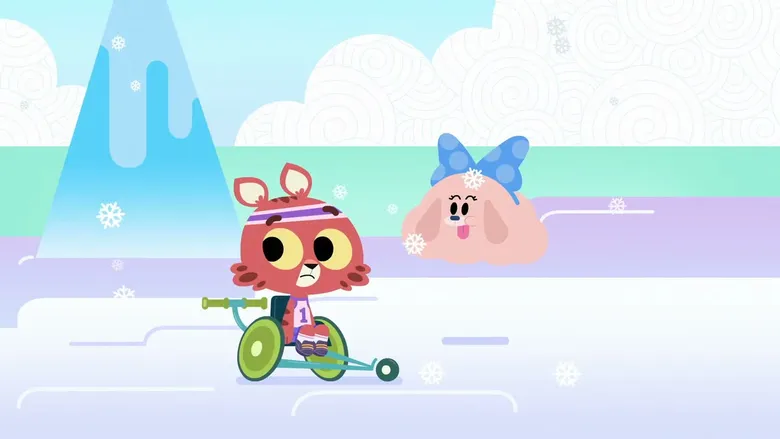
The world of Paprika is imaginative and stylized, set in a bright playground land of giant slides and rolling candy-colored hills where the characters are invented creatures. What grounds it is the everyday feeling of the story: children want to go down a slide, some feel scared, and a few reach for a comfort toy to feel brave. There is no villain anywhere; the only obstacle is a friendly gatekeeper, Sheriff Pearl, who keeps adding playful rules. The imaginative look sits comfortably alongside emotions and activities a small child knows well, which fits this age.
This score shows how enjoyable the series is for parents watching along. Scale: Tedious → Tolerable → Pleasant → Enjoyable.
This is polished, professional animation with a clean flat art style, warm pastels, and expressive characters that hold up well for an adult in the room. The story is light but has a clear shape: the kids keep facing new rules before they can use the slide, and they end up learning that courage comes from within rather than from a comfort object. The running gag of the sheriff inventing one requirement after another carries mild wit for a grown-up, though the humor stays mostly child-pitched. With speech leading the mix and no looping songs, it is easy on adult ears.
Themes
Comfort object
Central
The whole episode centers on the children fetching, decorating and naming cuddly toys before the slide.
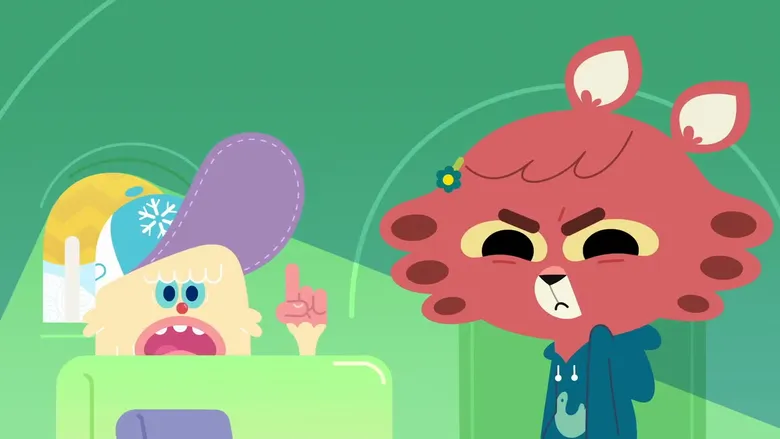
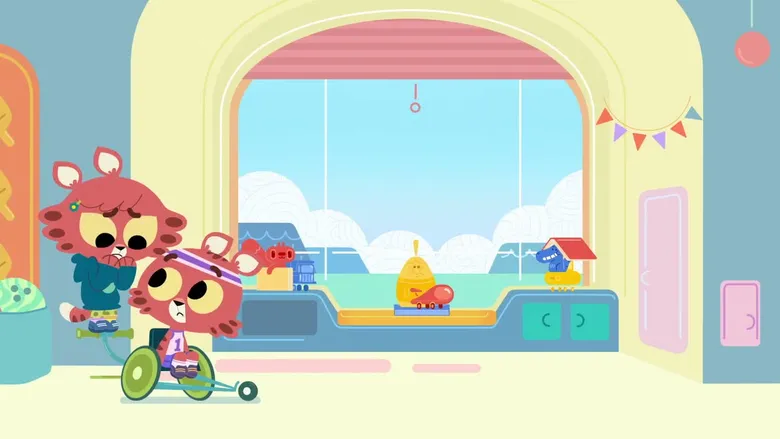
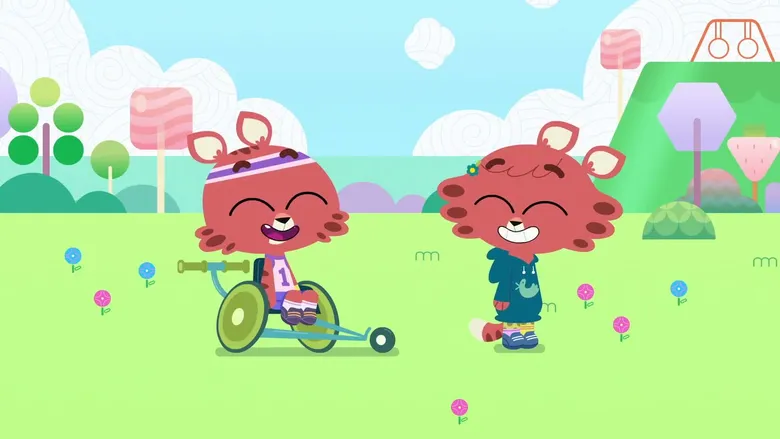
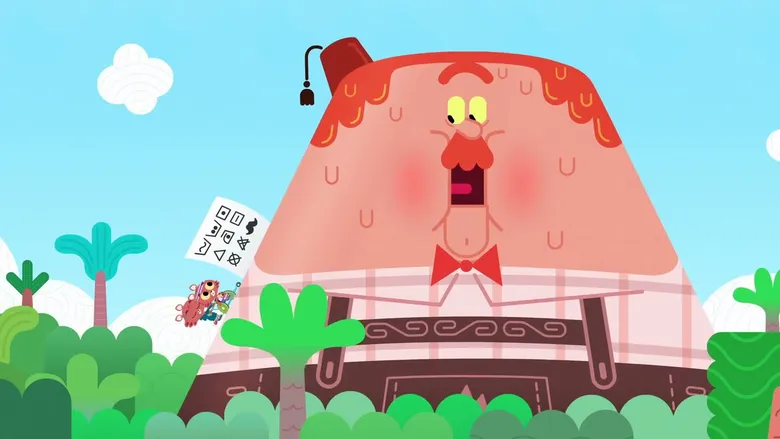
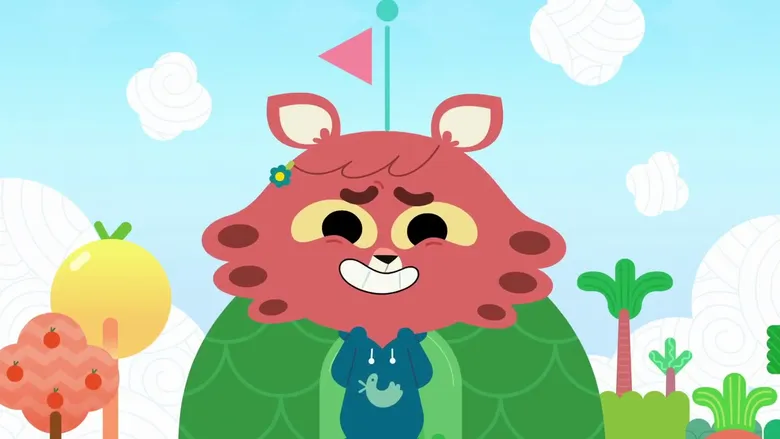
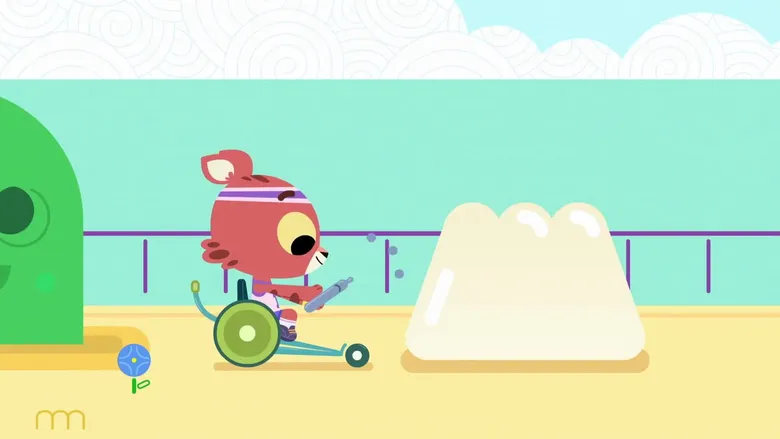
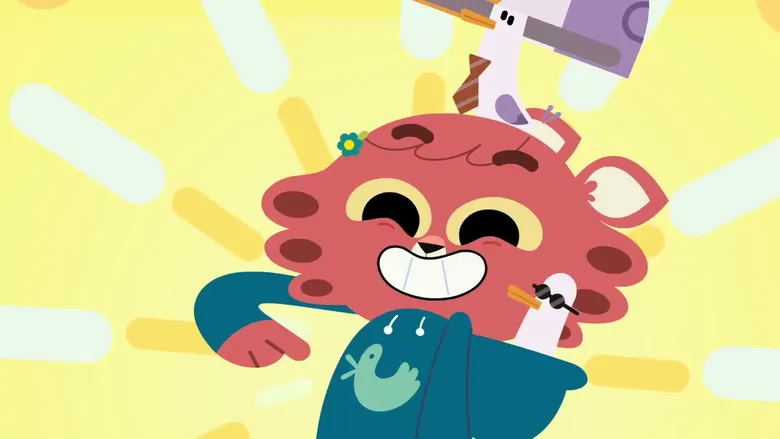
A group of young friends line up to ride a big slide, but the gatekeeper keeps announcing new requirements: first you need a cuddly toy, then it needs a name, then it must be hugged. Stan and Olivia scramble to turn a sock and a towel into proper cuddly toys, decorating and naming them along the way. When Olivia finally slides with no toy at all and is not scared, the others realise not everyone needs one. The episode ends with each child settling on what works for them, while Yeti happily keeps the toy he still wants.